The following is an excerpt from an essay by a fellow from the Sikh faith tradition - Ishwar Singh - who is leading the GOP in a prayer today at the GOP National Convention. He said...
I am honored to be the first Sikh American in U.S. history to deliver the invocation at a national convention. On Wednesday, I will offer a prayer at the Republican National Convention from my Sikh faith.
The prayer calls upon the American public to join with us in recognition that we are one family. As an immigrant, a small-business owner and a father, I am humbled by the opportunity to address the nation. When I came to this country over 40 years ago, never in my wildest dreams did I imagine the honor of offering a prayer for the nation. My story is possible only in America.
My prayer will be an opportunity to share the spirit of the Sikh faith with the American people. The tenets of Sikhism – humility, equality, and justice – lie at the heart of the American ethic.
A truly wonderful sentiment. God bless him.
I have a question for my more conservative readers: Yes or no?
Should the GOP allow this fella to lead a prayer for the GOP? Do you have any problem with it, personally? Any reservations?
As a Christian, would you feel comfortable sitting in a room full of mostly other Christians, bowing your head and praying along with this guy? Are you comfortable in general with taking part in interfaith prayers?
Do you think that God does not hear this prayer, so it is a rather silly thing for him to do and for the GOP to allow? Or do you find this to be a good thing, a genuine prayer offered genuinely to the one true God? Or somewhere in between?
What are your thoughts? I have no agenda here, I'm just curious what your opinions are.
Wednesday, August 29, 2012


Tuesday, August 21, 2012
The Bible and Economics
Part of an ongoing series looking at all the many passages in the Bible that deal with wealth and poverty issues. You can see the links to the other passages in the series under the heading "The Bible and Economics" below.
Today, I'm looking at the Gospel of Mark, Chapters 3 - 6.
You can see others in this series in the "Bible and Economics" link below (on the left).
As I noted in the last time I posted on this series (from Mark 1 and 2), there seems to me to be an undercurrent of Mark speaking to economic issues in ways that may not be as overt as some of the more direct passages (ie, "Woe to you who are rich..."), but I think it's worth looking at and considering how these words would have been heard by its first century audience.
For your consideration...
Another time Jesus went into the synagogue, and a man with a shriveled hand was there. Some of them were looking for a reason to accuse Jesus, so they watched him closely to see if he would heal him on the Sabbath. Jesus said to the man with the shriveled hand, “Stand up in front of everyone.”
Then Jesus asked them, “Which is lawful on the Sabbath: to do good or to do evil, to save life or to kill?” But they remained silent.
He looked around at them in anger and, deeply distressed at their stubborn hearts, said to the man, “Stretch out your hand.” He stretched it out, and his hand was completely restored.
Then the Pharisees went out and began to plot with the Herodians how they might kill Jesus.
~Mark 3: 1-6
This is part of a series of action-oriented stories of Jesus healing the poor sick folk around him and his first dealings with the religious authorities. Here we see, early in Jesus' ministry according to Mark, that the Pharisees were already plotting to kill him, and watching his every word, looking for some justification for prosecuting Jesus.
One question that arises, to me, is, Why are the pharisees so offended by Jesus' doing of good deeds? Why is his ministry to the poor and ill and his healing the sick so dangerous that they think they need to kill him? And not only that, but what was Jesus preaching and teaching that could unite groups (Pharisees and Herodians) who would normally be enemies?
Yet another point we see here is Jesus' use of questions to confront the religious authorities - questions that tend to go unanswered. "Is it WRONG to do good on the Sabbath?" Jesus asks them.
Well, obviously, of course it's always good to do good, even on the Sabbath. That's just common sense. But the religious authorities of Jesus' day (much like some religious authorities today) had much at stake in their claims of having the "right" interpretations of Scripture and Jesus' question called into question their interpretation (which said NO work could be done on the Sabbath - they held to a unreasonably literal interpretation of that ancient rule) and so, unable to answer the question rationally without pointing out the fallacy of their literal interpretation they chose to remain silent.
This (and Jesus' obvious anger at their hypocrisy) was calling into question their authority - both for the religious elite (the Pharisees) and the political elite (the Herodians) and that threatened them so much that they resorted to claims of heresy, of blasphemy - going so far as to call Jesus' work "of the devil" in the next chapter - and they felt they had to kill him to rid themselves of this threat to their power and beliefs.
But is there also an economic question here? Healing in Jesus' day (as it is today) was a money-making enterprise for most (Jesus, on the other hand, downplayed the healing aspect of what he was doing, repeatedly telling people NOT to spread the word of their healing at Jesus' hands and saying "YOUR faith has healed you..." rather than promoting his miracle-making chops).
I think a reasonable question to ask is: Whose bank account was Jesus cutting into by these healings? If we followed the money trail, would some of it wind up at the door of the Pharisees and Herodians?
I don't know, but it seems like a good question and at least a possibility.
Another economic angle here with the many healings we find in the first several chapters of Mark is that those who were sick were also more likely to be the poor, so this would certainly fit in with Jesus' proclamation that he had come to bring "Good news to the poor, Healing for the sick..." There are many stories of other healings in the first five chapters of Mark, but I'm going to jump on up to Mark 6, where Jesus sends out the Twelve to preach and heal...
Then Jesus went around teaching from village to village. Calling the Twelve to him, he began to send them out two by two and gave them authority over impure spirits.
These were his instructions: “Take nothing for the journey except a staff—no bread, no bag, no money in your belts. Wear sandals but not an extra shirt. Whenever you enter a house, stay there until you leave that town.
And if any place will not welcome you or listen to you, leave that place and shake the dust off your feet as a testimony against them.”
~Mark 6:6-11
Here, we have the example of Jesus - the God who had no place to lay his head, who lived simply, sharing a communal life with his band of followers. And when Jesus sends them out to do a bit of preaching, he sends them out, likewise, with little/no money or resources, but to rely upon community kindness for their needs.
Interestingly, we can see this simple community in contrast with the extravagant political community of King Herod, in the rest of chapter 6. This was Herod Antipas, I'm told, who was a Jewish leader with deep ties to the Roman occupiers, the ones the Herodians were loyal to...
On his birthday Herod gave a banquet for his high officials and military commanders and the leading men of Galilee. When the daughter of Herodias came in and danced, she pleased Herod and his dinner guests.
The king said to the girl, “Ask me for anything you want, and I’ll give it to you.” And he promised her with an oath, “Whatever you ask I will give you, up to half my kingdom...”
~Mark 6: 21-23
You may remember that this is the story where John the Baptist goes on to lose his head, when the dancing daughter asks for that as her "prize..."
Quite a different "kingdom" from the one that Jesus showed by example and by teaching...
Thoughts?

Today, I'm looking at the Gospel of Mark, Chapters 3 - 6.
You can see others in this series in the "Bible and Economics" link below (on the left).
As I noted in the last time I posted on this series (from Mark 1 and 2), there seems to me to be an undercurrent of Mark speaking to economic issues in ways that may not be as overt as some of the more direct passages (ie, "Woe to you who are rich..."), but I think it's worth looking at and considering how these words would have been heard by its first century audience.
For your consideration...
Another time Jesus went into the synagogue, and a man with a shriveled hand was there. Some of them were looking for a reason to accuse Jesus, so they watched him closely to see if he would heal him on the Sabbath. Jesus said to the man with the shriveled hand, “Stand up in front of everyone.”
Then Jesus asked them, “Which is lawful on the Sabbath: to do good or to do evil, to save life or to kill?” But they remained silent.
He looked around at them in anger and, deeply distressed at their stubborn hearts, said to the man, “Stretch out your hand.” He stretched it out, and his hand was completely restored.
Then the Pharisees went out and began to plot with the Herodians how they might kill Jesus.
~Mark 3: 1-6
This is part of a series of action-oriented stories of Jesus healing the poor sick folk around him and his first dealings with the religious authorities. Here we see, early in Jesus' ministry according to Mark, that the Pharisees were already plotting to kill him, and watching his every word, looking for some justification for prosecuting Jesus.
One question that arises, to me, is, Why are the pharisees so offended by Jesus' doing of good deeds? Why is his ministry to the poor and ill and his healing the sick so dangerous that they think they need to kill him? And not only that, but what was Jesus preaching and teaching that could unite groups (Pharisees and Herodians) who would normally be enemies?
Yet another point we see here is Jesus' use of questions to confront the religious authorities - questions that tend to go unanswered. "Is it WRONG to do good on the Sabbath?" Jesus asks them.
Well, obviously, of course it's always good to do good, even on the Sabbath. That's just common sense. But the religious authorities of Jesus' day (much like some religious authorities today) had much at stake in their claims of having the "right" interpretations of Scripture and Jesus' question called into question their interpretation (which said NO work could be done on the Sabbath - they held to a unreasonably literal interpretation of that ancient rule) and so, unable to answer the question rationally without pointing out the fallacy of their literal interpretation they chose to remain silent.
This (and Jesus' obvious anger at their hypocrisy) was calling into question their authority - both for the religious elite (the Pharisees) and the political elite (the Herodians) and that threatened them so much that they resorted to claims of heresy, of blasphemy - going so far as to call Jesus' work "of the devil" in the next chapter - and they felt they had to kill him to rid themselves of this threat to their power and beliefs.
But is there also an economic question here? Healing in Jesus' day (as it is today) was a money-making enterprise for most (Jesus, on the other hand, downplayed the healing aspect of what he was doing, repeatedly telling people NOT to spread the word of their healing at Jesus' hands and saying "YOUR faith has healed you..." rather than promoting his miracle-making chops).
I think a reasonable question to ask is: Whose bank account was Jesus cutting into by these healings? If we followed the money trail, would some of it wind up at the door of the Pharisees and Herodians?
I don't know, but it seems like a good question and at least a possibility.
Another economic angle here with the many healings we find in the first several chapters of Mark is that those who were sick were also more likely to be the poor, so this would certainly fit in with Jesus' proclamation that he had come to bring "Good news to the poor, Healing for the sick..." There are many stories of other healings in the first five chapters of Mark, but I'm going to jump on up to Mark 6, where Jesus sends out the Twelve to preach and heal...
Then Jesus went around teaching from village to village. Calling the Twelve to him, he began to send them out two by two and gave them authority over impure spirits.
These were his instructions: “Take nothing for the journey except a staff—no bread, no bag, no money in your belts. Wear sandals but not an extra shirt. Whenever you enter a house, stay there until you leave that town.
And if any place will not welcome you or listen to you, leave that place and shake the dust off your feet as a testimony against them.”
~Mark 6:6-11
Here, we have the example of Jesus - the God who had no place to lay his head, who lived simply, sharing a communal life with his band of followers. And when Jesus sends them out to do a bit of preaching, he sends them out, likewise, with little/no money or resources, but to rely upon community kindness for their needs.
Interestingly, we can see this simple community in contrast with the extravagant political community of King Herod, in the rest of chapter 6. This was Herod Antipas, I'm told, who was a Jewish leader with deep ties to the Roman occupiers, the ones the Herodians were loyal to...
On his birthday Herod gave a banquet for his high officials and military commanders and the leading men of Galilee. When the daughter of Herodias came in and danced, she pleased Herod and his dinner guests.
The king said to the girl, “Ask me for anything you want, and I’ll give it to you.” And he promised her with an oath, “Whatever you ask I will give you, up to half my kingdom...”
~Mark 6: 21-23
You may remember that this is the story where John the Baptist goes on to lose his head, when the dancing daughter asks for that as her "prize..."
Quite a different "kingdom" from the one that Jesus showed by example and by teaching...
Thoughts?
Monday, August 20, 2012
The Difficult Story of Hagar...
...and the difficult stories of sexual exploitation/oppression.
We have a friend who is a minister in Morocco and she preached at our church two Sundays ago. I've excerpted bits of the sermon here, and you can read the whole thing at my church blog. In the sermon, she compares the difficult biblical story of Hagar (Abram's concubine/sex slave) and compares it with those who are forced into prostitution in Africa. It's a painful, challenging sermon if you're inclined to give it a try.
Hagar’s story is one of many poignant and painful stories of women in Hebrew scripture. It’s a tale in which we see how flawed our forebears in the faith could be (and believe me I'm grateful for that, because it reminds us how real they are). But the story is hard...
And though the Genesis story is ultimately redemptive, in Christian tradition Hagar’s legacy is tainted by Paul’s disparaging metaphorical use of her story in Galatians – we are children of the free woman and not children of the slave woman. Ugh. Why did he have to say that? The stigma of slavery sticks to her as if she were to blame for the injustice of her lot in life.
But Muslims don’t have that baggage. Hagar is a faith hero in Islam, even if, interestingly enough, her name, her story doesn’t show up in the Qur’an...
Hagar didn’t have to try to remember that she needed God. Hagar, as a female slave, was sexually (and every other way) exploited, a foreigner in the service of a nomadic family, themselves strangers in a strange land; she was the lowliest of the low. Muslim tradition says she was given to Sarah by Egypt’s pharaoh while Sarah was kept in his harem. Hagar lived completely at the mercy of those who possessed her; she had no one to turn to when she was in need or distress.
So when she can take Sarah’s harsh treatment no longer, Hagar reaches out to … no one; she simply runs away. It is the angel of the Lord who reaches out to her, who seeks Hagar and finds her beside a spring in the wilderness. There God’s angel calls her by name, encourages her, and blesses her...
Over the past nine months, I have met a lot of women who could be called Hagar. Though more often than not, they are called Blessing, Precious, Praise, Grace, Gift, Glory, Beauty, Esther. They are sub-Saharan African women, mostly Nigerian, whose experience resonates with that of Hagar.
While they are not officially slaves, they are all caught up in a human trafficking network that has forced them into prostitution (explicitly so or de facto) in Morocco...
And then we got up and danced and sang praises to God. Blessing (one of four women bearing that name) led us in a praise song that recalled how Jesus had walked with them through every trial. We sang verse after verse in Nigerian pidgin English with different hardships noted. Jesus walked with them they sang and they were right.
But bad things still happened to them. All the time. In the workshop, they made a banner representing their experience in Morocco; it is covered with human figures who are, let’s just say, explicitly anatomically correct and clearly male. Sexual exploitation is at the center of their existence. But, still, you can look at their faces when they sing and know it’s not everything. It’s not the whole of who they are...
And it's particular hard for us to let ourselves see people in need, obviously in trouble... We don’t want to see too much because we might understand too much, feel too connected, feel called to get involved and we are already doing so much. We might even be pushed to see more than we bargained for – connections between our lifestyles and their misery. And what do we do with that? What do we do with them? Do we squeeze our eyes shut and plug our ears?
Well, that’s not what God does. And as children of the Living, Hearing, Seeing God, we are called to begin, I believe, by opening our eyes and our ears...
I know you share with me this dream for these women who are indeed Blessed and Blessing in God’s sight, Precious, Graced, Gifted and Beautiful, their own names bearing witness to this truth. And it’s my prayer for us, for me and for all you who are here, that we, too, may know the deep, blessed truth of God’s seeing and hearing us and have eyes to see and ears to hear one another, to be part of that flow of blessing.
Now and forevermore. Amen.
Thursday, August 16, 2012
Hamba Nathi
At our church this last Sunday, our dear sister, Karen was in from Morocco and preached (and did an amazing, powerful job). She also taught us a new (for us) song: Hamba Nathi, Mkhululi wethu, which roughly translates from the Zulu, Come and join us, the journey is long. We sang the additonal verse, Share our burden and join in the song. A very Jeff Streetian song and one I'm sure we'll be singing again.
Thanks to Karen, Kevin and Claire for sharing so freely with us this week!
Tuesday, August 7, 2012
Know Your Poop
Pop Quiz Time!
Correctly identify the excrement shown above. Is it...
A.) a dog log
B.) cat scat
C.) a bird turd
D.) goose juice
E.) a duck puck
...?
Choose the correct answer and put down your pencil when time is up.
Time's up.

Correctly identify the excrement shown above. Is it...
A.) a dog log
B.) cat scat
C.) a bird turd
D.) goose juice
E.) a duck puck
...?
Choose the correct answer and put down your pencil when time is up.
Time's up.
Monday, July 30, 2012
The Ballad of Sheriff Yoder
(The Unarmed Lawman)
[Sort of to the tune of "Ghost Riders in the Sky..."]
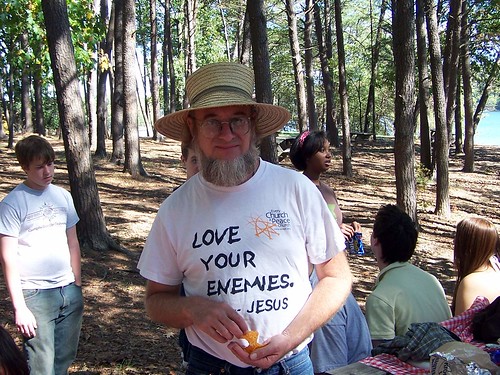
There came a stranger to our town, his hands were hard and blistered
He wore a white hat on his head, his face it sported whiskers
He wanted us to call him sheriff but we had our doubts
We just called him...Yoder (called him Yoder)
He was an Amish from back east, he came with an agenda
To bring peace to the Wild Wild West, he wore a star on his suspenda's
He rode an old gray farming mule he called Zechariah,
But we just called him Yoder (the man, not the mule)
Now, Black Bart was the meanest cuss that you ever laid eyes on
He liked to kick on dogs and spit on kids, he was a western python
He came to town to challenge Yoder to a deadly duel
Came to shoot poor Yoder (the gunless lawman)
Because ol' Yoder, he was Amish he didn't believe in fighting
And Black Bart, he was pistol packing and as fast as lightning
“Take this, Yoder!” Black Bart yelled as the bullets flew
Flew toward Lawman Yoder (Deadman Yoder)
Now, it's hard to fight with someone who will not fight with you
And the way that Yoder stared him down made Black Bart come unglued
The bullets bounced all around, one struck Bart in the foot
“The name is Sheriff Yoder!” (Sheriff Yoder)
The townfolks whooped and hollered as Bart danced all around
No one ever had the courage to face Black Bart down
The Amish sheriff from the east had won our undying love
We called him Sheriff Yoder, Sheriff Yoder, Sheriff Yoder!
[Sort of to the tune of "Ghost Riders in the Sky..."]
There came a stranger to our town, his hands were hard and blistered
He wore a white hat on his head, his face it sported whiskers
He wanted us to call him sheriff but we had our doubts
We just called him...Yoder (called him Yoder)
He was an Amish from back east, he came with an agenda
To bring peace to the Wild Wild West, he wore a star on his suspenda's
He rode an old gray farming mule he called Zechariah,
But we just called him Yoder (the man, not the mule)
Now, Black Bart was the meanest cuss that you ever laid eyes on
He liked to kick on dogs and spit on kids, he was a western python
He came to town to challenge Yoder to a deadly duel
Came to shoot poor Yoder (the gunless lawman)
Because ol' Yoder, he was Amish he didn't believe in fighting
And Black Bart, he was pistol packing and as fast as lightning
“Take this, Yoder!” Black Bart yelled as the bullets flew
Flew toward Lawman Yoder (Deadman Yoder)
Now, it's hard to fight with someone who will not fight with you
And the way that Yoder stared him down made Black Bart come unglued
The bullets bounced all around, one struck Bart in the foot
“The name is Sheriff Yoder!” (Sheriff Yoder)
The townfolks whooped and hollered as Bart danced all around
No one ever had the courage to face Black Bart down
The Amish sheriff from the east had won our undying love
We called him Sheriff Yoder, Sheriff Yoder, Sheriff Yoder!
Sunday, July 29, 2012
Beady Excerpt: Whole World
As mentioned before, my kids are in a band together with two of their life-long friends. Last year, the signed a record contract with a local record producer (sonaBLAST! Records) and they recorded 12 songs in the Spring and it's been off being mastered and remastered, and now it's off being packaged. They're just a few weeks away from having the CD in hand.
Above, you can hear the first part of one of their new songs. You can hear a clip from another song on their website. I think they've done a great job and am looking forward to hearing/seeing the whole thing.
Beady, coming soon to a radio near you?
Love's an old song on the radio that I heard when I was a child
It's the sound of my mother playing piano in the parlor
And the notes, they all go wild, they just go wild...
And we sang sad songs to the softly setting sun
of nights we hardly remember
Of the old oak tree and all of their stories
buried so deep beneath the earth...
~from "Hickory Desk"
Thursday, July 19, 2012
The Normalization of Banjos...
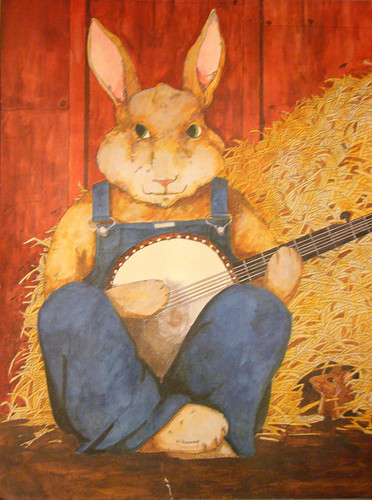
So, I was looking at a recent local newspaper today and, what did I see on the front page...? Yet another story about banjos and banjo players! This story was "celebrating" local banjo makers, going so far as to suggest that they are cultural "treasures" that have played a key role in our region's history.
It seems you can't turn around without some Hollywood celebrity or mainstream news talking head bringing up yet another news story talking about banjos. Was it just last year's Grammy's show that featured some banjo-playing band backing up Bob Dylan?? And I could be wrong, but if I'm not mistaken, some banjos appear in the soundtrack of the popular Hunger Games movie out this year. Coincidence? Don't be naive!
And don't get me started on the Coen Brothers...
Now, some people may think that I complain too much about this normalization of banjos issue. Some have gone so far as to call it "suspicious" that I talk so much about banjos ("The fellow doth protest too much..."), but the only reason I'm forced to talk about banjos is because they're out there pushing the banjo agenda.
Yes, Banjo Agenda!
Now, I know that will raise some eyebrows ("Really, Dan? The banjo 'agenda'...? Really??"), but it's real, it's happening, it's out there in the liberal media every day. There is a concentrated effort by some (those who reject our traditional values) to normalize banjos and make them an accepted entity in our culture and we have to draw a line in the sand somewhere!
I'm sure that the knee-jerk response will be to engage in ad hom attacks and call me "banjo-phobic" and suggest I hate banjos. Of course, for those interested in the Truth, nothing could be further from it: I don't hate banjos. I've personally seen and known some banjos, even listened to them a little.
There's nothing wrong with banjos, per se, it's the widespread effort to normalize this aberrant instrument and make it accepted - even amongst our children - that's the problem!
You see, you can't really have banjos without it leading to... banjo-playing, and that's where you get into problems. It's just not natural. God made Adam and Eve, not Adam and Earl!*
Did you know that they actually had a banjo player coming to my childrens' school to promote the lifestyle! There were no notes to parents, warning us, no opportunity to opt out, they just marched our children down to the library, sat them down and force-fed them a little Bile Them Cabbage Down. In eastern Kentucky, they actually have banjo camps for children to indoctrinate our most vulnerable ones, brainwashing them into accepting this unnatural instrument!
So, do I hate banjos? Of course, not! Love the banjo, hate the banjo-playing, that's the point.
Just don't try to push your banjo-playing abominations off on the God-fearing public and expect decent people to remain silent.**
=======
* Note to the banjo-ignorant: This is a reference to banjo-normalist, Earl Scruggs.
** Post Script: This post is not actually about banjos. I love banjos and banjo players. I'm married to one (a banjo-player, that is - not a banjo), even. I don't hate banjos... This is one of them there satires.
Honest.
It seems you can't turn around without some Hollywood celebrity or mainstream news talking head bringing up yet another news story talking about banjos. Was it just last year's Grammy's show that featured some banjo-playing band backing up Bob Dylan?? And I could be wrong, but if I'm not mistaken, some banjos appear in the soundtrack of the popular Hunger Games movie out this year. Coincidence? Don't be naive!
And don't get me started on the Coen Brothers...
Now, some people may think that I complain too much about this normalization of banjos issue. Some have gone so far as to call it "suspicious" that I talk so much about banjos ("The fellow doth protest too much..."), but the only reason I'm forced to talk about banjos is because they're out there pushing the banjo agenda.
Yes, Banjo Agenda!
Now, I know that will raise some eyebrows ("Really, Dan? The banjo 'agenda'...? Really??"), but it's real, it's happening, it's out there in the liberal media every day. There is a concentrated effort by some (those who reject our traditional values) to normalize banjos and make them an accepted entity in our culture and we have to draw a line in the sand somewhere!
I'm sure that the knee-jerk response will be to engage in ad hom attacks and call me "banjo-phobic" and suggest I hate banjos. Of course, for those interested in the Truth, nothing could be further from it: I don't hate banjos. I've personally seen and known some banjos, even listened to them a little.
There's nothing wrong with banjos, per se, it's the widespread effort to normalize this aberrant instrument and make it accepted - even amongst our children - that's the problem!
You see, you can't really have banjos without it leading to... banjo-playing, and that's where you get into problems. It's just not natural. God made Adam and Eve, not Adam and Earl!*
Did you know that they actually had a banjo player coming to my childrens' school to promote the lifestyle! There were no notes to parents, warning us, no opportunity to opt out, they just marched our children down to the library, sat them down and force-fed them a little Bile Them Cabbage Down. In eastern Kentucky, they actually have banjo camps for children to indoctrinate our most vulnerable ones, brainwashing them into accepting this unnatural instrument!
So, do I hate banjos? Of course, not! Love the banjo, hate the banjo-playing, that's the point.
Just don't try to push your banjo-playing abominations off on the God-fearing public and expect decent people to remain silent.**
=======
* Note to the banjo-ignorant: This is a reference to banjo-normalist, Earl Scruggs.
** Post Script: This post is not actually about banjos. I love banjos and banjo players. I'm married to one (a banjo-player, that is - not a banjo), even. I don't hate banjos... This is one of them there satires.
Honest.
Monday, July 16, 2012
Down by the Fishing Hole
I have always been a fan of Andy Griffith and it was with great sadness that I heard of his parting off this mortal coil. Of course, I treasure The Andy Griffith Show as a classic bit of televised literature that has never grown stale or out of style.
Interestingly (and sadly) as I was looking up quotes from the TV show, I saw a bit of news about Mr Griffith - that in 2010, he filmed a commercial in support of Obama's health care proposal and eventually, the ads were pulled because Mr Griffith had received "hundreds of death threats..." Pathetic.
Also, while looking for quotes, I came across this funny video from the 2008 election, wherein little Opie Taylor talks with his dad, Andy, about choosing the right candidate.
Anyway, here are a few "Andy Griffith Show" quotes that I found... Enjoy.
Barney Fife: The last big buy was my mom's and dad's anniversary present.
Andy Taylor: What'd ya get 'em?
Barney Fife: A septic tank.
Andy Taylor: For their anniversary?
Barney Fife: They're awful hard to buy for. Besides, it was something they could use. They were really thrilled. It had two tons of concrete in it. All steel reinforced.
Andy Taylor: You're a fine son, Barn.
Barney Fife: I try.
Floyd Lawson: You know, everyone complains about the weather but nobody does anything about it. Calvin Coolidge said that.
Andy Taylor: No, Floyd, that wasn't Calvin Coolidge that said that, it was Mark Twain.
Floyd Lawson: Then what did Calvin Coolidge say?
Aunt Bee Taylor: Did you like the white beans you had for supper?
Andy Taylor: Uh huh.
Aunt Bee Taylor: Well, you didn't say anything.
Andy Taylor: Well, I ate four bowls. If that ain't a tribute to white beans, I don't know what is.
Aunt Bee Taylor: Well...
Andy Taylor: Eating speaks louder than words.
Aunt Bee Taylor: You know, your education was worth every penny of it.
Andy Taylor: When a man carries a gun all the time, the respect he thinks he's getting might really be fear. So I don't carry a gun because I don't want the people of Mayberry to fear a gun. I'd rather they respect me.
Barney Fife: All I'm saying is that there are some things beyond the ken of mortal man that shouldn't be tampered with. We don't know everything, Andy. There's plenty going on right now in the Twilight Zone that we don't know anything about and I think we ought to stay clear.
Andy Taylor: Opie! Time to come in, son.
Opie Taylor: Aw Pa, just a little while longer... please?
Andy Taylor: Well, OK.
[to Barney]
Andy Taylor: Daylight's precious when your a youngen'.
Floyd Lawson: [while looking at himself in the mirror] Wretch, wretch! Deceitful wretch!
Barney Fife: A boob that's what I am, a boob!
Andy Taylor: [telling Opie and his friends the story of Paul Revere] And he said, "The British is comin, the British is comin! Git your guns, we gonna have us a revolution!"
[Andy has told Rafe Hollister to try out for the musical]
Barney Fife: I'm surprised at you, Andy. They want people who have had musical training. Why, suppose they ask Rafe to do something he don't know? Rafe, if they asked you to sing a cappella, could you do it?
Rafe Hollister: No.
Andy Taylor: Hey, Barn, what if they was to ask you if you could sing a cappella, what would *you* do?
Barney Fife: Why, I'd do it!
[snapping fingers in rhythm]
Barney Fife: "A cappella, a cappella"... Well, I don't remember all the words.
Andy Taylor: [Briscoe is getting dressed for Charlene's wedding] Hold still, Mr. Darling, while I put on your tie.
Briscoe Darling: Ever since I saw a hangin', I been nervous about wearin' one of these things.
...and finally, some of my favorite lines from the show: The songs the Darlings DIDN'T sing...
Briscoe Darling: How 'bout "Don't Hit Your Grandma with a Great Big Stick"?
Charlene Darling: No, Paw, That one makes me cry!
Briscoe Darling: How 'bout "I Hurt You, I Hurt You, Dirty, Dirty Me"?
Charlene Darling: No, Paw, That one makes me cry!
That's it - I can only find the two "Makes me cry" quotes, but I know there are a bunch more. Anyone else remember any of those?
Rest in Peace, Mr Griffith.

Interestingly (and sadly) as I was looking up quotes from the TV show, I saw a bit of news about Mr Griffith - that in 2010, he filmed a commercial in support of Obama's health care proposal and eventually, the ads were pulled because Mr Griffith had received "hundreds of death threats..." Pathetic.
Also, while looking for quotes, I came across this funny video from the 2008 election, wherein little Opie Taylor talks with his dad, Andy, about choosing the right candidate.
Anyway, here are a few "Andy Griffith Show" quotes that I found... Enjoy.
Barney Fife: The last big buy was my mom's and dad's anniversary present.
Andy Taylor: What'd ya get 'em?
Barney Fife: A septic tank.
Andy Taylor: For their anniversary?
Barney Fife: They're awful hard to buy for. Besides, it was something they could use. They were really thrilled. It had two tons of concrete in it. All steel reinforced.
Andy Taylor: You're a fine son, Barn.
Barney Fife: I try.
Floyd Lawson: You know, everyone complains about the weather but nobody does anything about it. Calvin Coolidge said that.
Andy Taylor: No, Floyd, that wasn't Calvin Coolidge that said that, it was Mark Twain.
Floyd Lawson: Then what did Calvin Coolidge say?
Aunt Bee Taylor: Did you like the white beans you had for supper?
Andy Taylor: Uh huh.
Aunt Bee Taylor: Well, you didn't say anything.
Andy Taylor: Well, I ate four bowls. If that ain't a tribute to white beans, I don't know what is.
Aunt Bee Taylor: Well...
Andy Taylor: Eating speaks louder than words.
Aunt Bee Taylor: You know, your education was worth every penny of it.
Andy Taylor: When a man carries a gun all the time, the respect he thinks he's getting might really be fear. So I don't carry a gun because I don't want the people of Mayberry to fear a gun. I'd rather they respect me.
Barney Fife: All I'm saying is that there are some things beyond the ken of mortal man that shouldn't be tampered with. We don't know everything, Andy. There's plenty going on right now in the Twilight Zone that we don't know anything about and I think we ought to stay clear.
Andy Taylor: Opie! Time to come in, son.
Opie Taylor: Aw Pa, just a little while longer... please?
Andy Taylor: Well, OK.
[to Barney]
Andy Taylor: Daylight's precious when your a youngen'.
Floyd Lawson: [while looking at himself in the mirror] Wretch, wretch! Deceitful wretch!
Barney Fife: A boob that's what I am, a boob!
Andy Taylor: [telling Opie and his friends the story of Paul Revere] And he said, "The British is comin, the British is comin! Git your guns, we gonna have us a revolution!"
[Andy has told Rafe Hollister to try out for the musical]
Barney Fife: I'm surprised at you, Andy. They want people who have had musical training. Why, suppose they ask Rafe to do something he don't know? Rafe, if they asked you to sing a cappella, could you do it?
Rafe Hollister: No.
Andy Taylor: Hey, Barn, what if they was to ask you if you could sing a cappella, what would *you* do?
Barney Fife: Why, I'd do it!
[snapping fingers in rhythm]
Barney Fife: "A cappella, a cappella"... Well, I don't remember all the words.
Andy Taylor: [Briscoe is getting dressed for Charlene's wedding] Hold still, Mr. Darling, while I put on your tie.
Briscoe Darling: Ever since I saw a hangin', I been nervous about wearin' one of these things.
...and finally, some of my favorite lines from the show: The songs the Darlings DIDN'T sing...
Briscoe Darling: How 'bout "Don't Hit Your Grandma with a Great Big Stick"?
Charlene Darling: No, Paw, That one makes me cry!
Briscoe Darling: How 'bout "I Hurt You, I Hurt You, Dirty, Dirty Me"?
Charlene Darling: No, Paw, That one makes me cry!
That's it - I can only find the two "Makes me cry" quotes, but I know there are a bunch more. Anyone else remember any of those?
Rest in Peace, Mr Griffith.
Friday, July 6, 2012

Monday, July 2, 2012
Deep Darkness
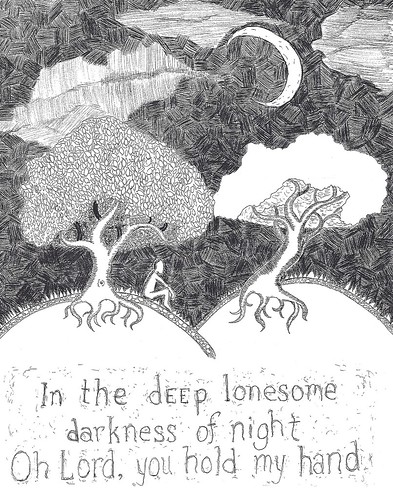
Our hot, arid town, in our dry, scorched state finally received some rain last night.
It came in a mad downpour, as if to make up for the many dry weeks in 15 minutes of deluge. I'm sure it didn't put a dent in our need for water, but it sure felt good to step out in the cold rain on a hot day.
The storm where we are was strong enough that our neighborhood had its power knocked out. We spent our evening hours and went to bed in darkness.
But the kids were home and we laughed and told stories and lit candles and had an enjoyable time in the dark.
I rather like the reminder that we aren't in control of everything.
It came in a mad downpour, as if to make up for the many dry weeks in 15 minutes of deluge. I'm sure it didn't put a dent in our need for water, but it sure felt good to step out in the cold rain on a hot day.
The storm where we are was strong enough that our neighborhood had its power knocked out. We spent our evening hours and went to bed in darkness.
But the kids were home and we laughed and told stories and lit candles and had an enjoyable time in the dark.
I rather like the reminder that we aren't in control of everything.
Friday, June 22, 2012
The Bible and Economics
Part of an ongoing series looking at all the many passages in the Bible that deal with wealth and poverty issues. You can see the links to the other passages in the series under the heading "The Bible and Economics" below.
Today, I'm looking at the Gospel of Mark, Chapters 1 and 2.
You can see others in this series in the "Bible and Economics" link below (on the left).
Before starting, let me just point out that much of what I find in Mark is a more subdued/vague reference to our practices related to wealth and poverty. You don't, for instance, find, "Blessed are you who are poor..." in Mark, instead, you find Jesus calling his disciples to leave all and follow him.
The teachings, while vague, continue to give a more complete picture of the teachings found in the Bible as it relates to how we deal with our material goods and needs.
For instance, we find in the first verses, a rapid fire description of Jesus' cousin and fellow preacher, John the Baptist...
And so John the Baptist appeared in the wilderness, preaching a baptism of repentance for the forgiveness of sins. The whole Judean countryside and all the people of Jerusalem went out to him. Confessing their sins, they were baptized by him in the Jordan River.
John wore clothing made of camel’s hair, with a leather belt around his waist, and he ate locusts and wild honey.
Mark 1: 4-6
and Jesus' trip to the wilderness...
At once the Spirit sent him out into the wilderness, and he was in the wilderness forty days, being tempted by Satan. He was with the wild animals, and angels attended him.
Mark 1: 12-13
and John's arrest and the start of Jesus' preaching...
After John was put in prison, Jesus went into Galilee, proclaiming the good news of God. “The time has come,” he said. “The kingdom of God has come near. Repent and believe the good news!”
Mark 1: 14-15
and Jesus calling the first disciples...
As Jesus walked beside the Sea of Galilee, he saw Simon and his brother Andrew casting a net into the lake, for they were fishermen. “Come, follow me,” Jesus said, “and I will send you out to fish for people.” At once they left their nets and followed him.
When he had gone a little farther, he saw James son of Zebedee and his brother John in a boat, preparing their nets. Without delay he called them, and they left their father Zebedee in the boat with the hired men and followed him.
Mark 1: 16-20
and Jesus' first sermons being alluded to...
They went to Capernaum, and when the Sabbath came, Jesus went into the synagogue and began to teach. The people were amazed at his teaching, because he taught them as one who had authority, not as the teachers of the law.
Mark 1: 21-22
and the description of Jesus associating with "sinners" and his quick conflict with the Pharisees...
Once again Jesus went out beside the lake. A large crowd came to him, and he began to teach them. As he walked along, he saw Levi son of Alphaeus sitting at the tax collector’s booth. “Follow me,” Jesus told him, and Levi got up and followed him.
While Jesus was having dinner at Levi’s house, many tax collectors and sinners were eating with him and his disciples, for there were many who followed him. When the teachers of the law who were Pharisees saw him eating with the sinners and tax collectors, they asked his disciples: “Why does he eat with tax collectors and sinners?”
On hearing this, Jesus said to them, “It is not the healthy who need a doctor, but the sick. I have not come to call the righteous, but sinners.”
Mark 2: 13-17
and, finally, Jesus' teaching about Sabbath and work and hunger...
One Sabbath Jesus was going through the grainfields, and as his disciples walked along, they began to pick some heads of grain. The Pharisees said to him, “Look, why are they doing what is unlawful on the Sabbath?”
He answered, “Have you never read what David did when he and his companions were hungry and in need? In the days of Abiathar the high priest, he entered the house of God and ate the consecrated bread, which is lawful only for priests to eat. And he also gave some to his companions.”
Then he said to them, “The Sabbath was made for man, not man for the Sabbath. So the Son of Man is Lord even of the Sabbath.”
Mark 2: 23-28
...and I'll stop there for today.
In these passages, while wealth, poverty, work, making a living, etc are not mentioned directly, there is a lot going on and a lot which impacts, it seems to me, our concepts of wealth and poverty.
For one thing, Mark is a rapid fire book of quick sound bytes from Jesus' life that leave you wondering, "What was going on there?? What was the context of THAT statement?"
Jesus just walks up to some strangers and says, "follow me," and they do? Is there more to that story?
Why was John the Baptist living in the wilderness dressed like a madman (or was his dress and diet that weird in that day)?
What WERE Jesus' teachings that so immediately stood out as different than the norm?
What WAS the "kingdom of God" that both Jesus and John were speaking of and what were the implications of teaching about it in that society in that way?
Why did the Pharisees so immediately take such a disliking to Jesus?
I think there are hints in these first verses that are more completely filled in by the rest of the Gospel teachings, and some of those ideas are specifically about our understanding of wealth and poverty.
What do you think?

Today, I'm looking at the Gospel of Mark, Chapters 1 and 2.
You can see others in this series in the "Bible and Economics" link below (on the left).
Before starting, let me just point out that much of what I find in Mark is a more subdued/vague reference to our practices related to wealth and poverty. You don't, for instance, find, "Blessed are you who are poor..." in Mark, instead, you find Jesus calling his disciples to leave all and follow him.
The teachings, while vague, continue to give a more complete picture of the teachings found in the Bible as it relates to how we deal with our material goods and needs.
For instance, we find in the first verses, a rapid fire description of Jesus' cousin and fellow preacher, John the Baptist...
And so John the Baptist appeared in the wilderness, preaching a baptism of repentance for the forgiveness of sins. The whole Judean countryside and all the people of Jerusalem went out to him. Confessing their sins, they were baptized by him in the Jordan River.
John wore clothing made of camel’s hair, with a leather belt around his waist, and he ate locusts and wild honey.
Mark 1: 4-6
and Jesus' trip to the wilderness...
At once the Spirit sent him out into the wilderness, and he was in the wilderness forty days, being tempted by Satan. He was with the wild animals, and angels attended him.
Mark 1: 12-13
and John's arrest and the start of Jesus' preaching...
After John was put in prison, Jesus went into Galilee, proclaiming the good news of God. “The time has come,” he said. “The kingdom of God has come near. Repent and believe the good news!”
Mark 1: 14-15
and Jesus calling the first disciples...
As Jesus walked beside the Sea of Galilee, he saw Simon and his brother Andrew casting a net into the lake, for they were fishermen. “Come, follow me,” Jesus said, “and I will send you out to fish for people.” At once they left their nets and followed him.
When he had gone a little farther, he saw James son of Zebedee and his brother John in a boat, preparing their nets. Without delay he called them, and they left their father Zebedee in the boat with the hired men and followed him.
Mark 1: 16-20
and Jesus' first sermons being alluded to...
They went to Capernaum, and when the Sabbath came, Jesus went into the synagogue and began to teach. The people were amazed at his teaching, because he taught them as one who had authority, not as the teachers of the law.
Mark 1: 21-22
and the description of Jesus associating with "sinners" and his quick conflict with the Pharisees...
Once again Jesus went out beside the lake. A large crowd came to him, and he began to teach them. As he walked along, he saw Levi son of Alphaeus sitting at the tax collector’s booth. “Follow me,” Jesus told him, and Levi got up and followed him.
While Jesus was having dinner at Levi’s house, many tax collectors and sinners were eating with him and his disciples, for there were many who followed him. When the teachers of the law who were Pharisees saw him eating with the sinners and tax collectors, they asked his disciples: “Why does he eat with tax collectors and sinners?”
On hearing this, Jesus said to them, “It is not the healthy who need a doctor, but the sick. I have not come to call the righteous, but sinners.”
Mark 2: 13-17
and, finally, Jesus' teaching about Sabbath and work and hunger...
One Sabbath Jesus was going through the grainfields, and as his disciples walked along, they began to pick some heads of grain. The Pharisees said to him, “Look, why are they doing what is unlawful on the Sabbath?”
He answered, “Have you never read what David did when he and his companions were hungry and in need? In the days of Abiathar the high priest, he entered the house of God and ate the consecrated bread, which is lawful only for priests to eat. And he also gave some to his companions.”
Then he said to them, “The Sabbath was made for man, not man for the Sabbath. So the Son of Man is Lord even of the Sabbath.”
Mark 2: 23-28
...and I'll stop there for today.
In these passages, while wealth, poverty, work, making a living, etc are not mentioned directly, there is a lot going on and a lot which impacts, it seems to me, our concepts of wealth and poverty.
For one thing, Mark is a rapid fire book of quick sound bytes from Jesus' life that leave you wondering, "What was going on there?? What was the context of THAT statement?"
Jesus just walks up to some strangers and says, "follow me," and they do? Is there more to that story?
Why was John the Baptist living in the wilderness dressed like a madman (or was his dress and diet that weird in that day)?
What WERE Jesus' teachings that so immediately stood out as different than the norm?
What WAS the "kingdom of God" that both Jesus and John were speaking of and what were the implications of teaching about it in that society in that way?
Why did the Pharisees so immediately take such a disliking to Jesus?
I think there are hints in these first verses that are more completely filled in by the rest of the Gospel teachings, and some of those ideas are specifically about our understanding of wealth and poverty.
What do you think?
Subscribe to:
Posts (Atom)