Sunday, June 30, 2024

Happy Birthday, Edwin Way Teale!

“Time is the river.
We are the islands.
Time washes around us and flows away and with it flow fragments of our lives.
So, little by little, each island shrinks…
But where, who can say, down the long stream of time, are our eroded days deposited?”

“The long fight to save wild beauty represents democracy at its best.
It requires citizens to practice the hardest of virtues--self-restraint.
Why cannot I take as many trout as I want from a stream?
Why cannot I bring home from the woods a rare wildflower?
Because if I do, everybody in this democracy should be able to do the same.

My act will be multiplied endlessly.
To provide protection for wildlife and wild beauty,
everyone has to deny himself proportionately.
Special privilege and conservation are ever at odds.”

“It is those who have compassion for all life who will best safeguard the life of [humanity].
Those who become aroused only when [humans are] endangered become aroused too late.

We cannot make the world uninhabitable for other forms of life and have it habitable for ourselves.
It is the conservationist who is concerned with the welfare of all the land and life of the country,
who, in the end, will do most to maintain the world as a fit place for human existence.”

"The more clearly we can focus our attention on the wonders and realities of the universe about us,
the less taste we shall have for destruction."

~Wise quotes from naturalist, Edwin Way Teale, who was born June 2, 1899 and lived up until 1980, my senior year of high school. (So, I'm a little late in noting his birthday, but it was the right month, at least!)

Thursday, June 27, 2024

Wisdom from Rumi

Your grief for what you’ve lost lifts a mirror
up to where you are bravely working.
Expecting the worst, you look, and instead,
here’s the joyful face you’ve been wanting to see.
Your hand opens and closes and opens and closes.
If it were always a fist or always stretched open,
you would be paralysed.
Your deepest presence is in every small contracting and
expanding,
the two as beautifully balanced and coordinated
as birdwings.

~"Bird Wings," by the great Muslim Poet, Rumi

Be like the sun for grace and mercy.
Be like the night to cover others' faults.
Be like running water for generosity.
Be like death for rage and anger.
Be like the Earth for modesty.
Appear as you are.
Be as you appear.

~Rumi

Saturday, June 15, 2024

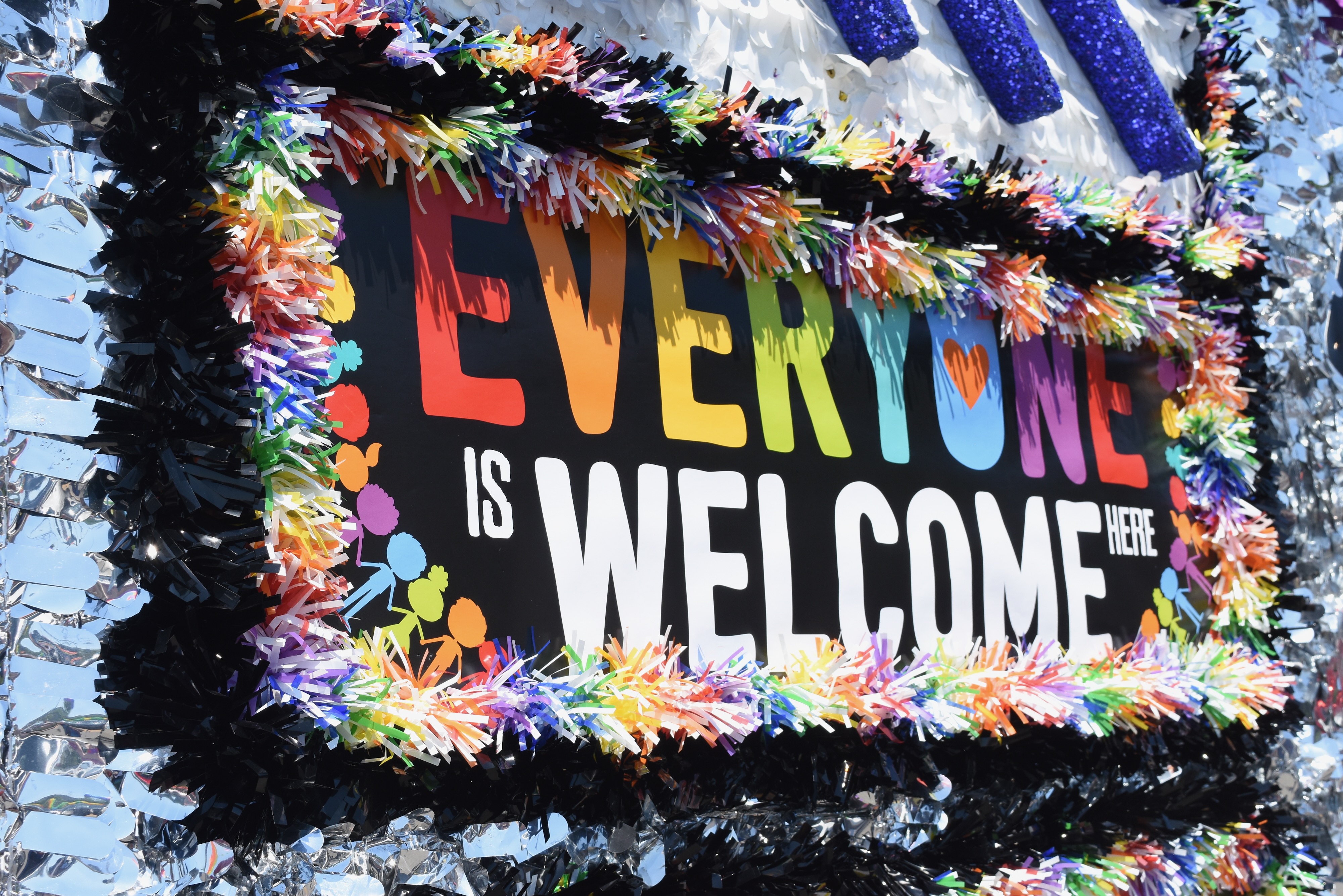
Happy Pride Day!


"Goodness is stronger than evil.
Love is stronger than hate.
Light is stronger than darkness.
Life is stronger than death.
Victory is ours through God who loved us."

~Desmond Tutu

"Love him and let him love you. Do you think anything else under heaven really matters?"

~James Baldwin

"and when we speak we are afraid
our words will not be heard
nor welcomed
but when we are silent
we are still afraid
So it is better to speak
remembering
we were never meant to survive"

~Audre Lorde

"This is my commandment, That you love one another, as I have loved you."

~Jesus

"Hope will never be silent."

~Harvey Milk

"To be afraid is to behave as if the truth were not true."

~Bayard Rustin

"Without community, there is no liberation."

~Audre Lorde

Thursday, June 13, 2024

She Dreamed


She dreamed of 
a rampaging river
ripping through the cold night sky

She dreamed of impossible
made practical
and doubtful
giving it a try

She dreamed of worlds clashing
and uniting
of day and and of night
of digging deeper holes
of black and of white
and all the colors, implied
in between
She dreamed 
of magick and mastery
of fear and of flight 
of hope and of horror
despair and of fright
but mostly
hope

Mostly
she dreamed of Hope
.

And then
she woke up
filled her cups with water
and took them 
to the river
and poured them deep within.

Monday, June 10, 2024

RIP, James Lawson


"...For me, nonviolence is that quality that comes out of all the great world religions, the notion that the creative force of the universe is love, that God is love, and that love is all encompassing. Gandhi insists—and I think this is Gandhi’s great contribution—that the creative force of the universe is the force that we humans must learn to exercise because that force is the only force that can cause the human race to do on earth God’s will.

And nonviolence is power. It is not, as I was originally told in college in 1947, just persuasion. Persuasion is a form of power. Aristotle says that power is the capacity to achieve purpose. It is a God given gift of creation to human beings. Nonviolence has its deep roots in the long journey of the human family as so many people operated out of love and truth in spite of all that was raging around them.

As Gandhi and King also said, nonviolence is the science of how you create your own life in the image of God. Nonviolence is the science of how you create a world that practices justice, truth and compassion."

"My mother’s word was you should not retaliate by fighting. At age eight, in the Spring of the fourth grade, I slapped a boy who yelled racist epithets at me on Main Street. And for the first time, when I returned home from this errand for my mother, I told her about the incident.

She continued to do what she was doing in the kitchen and without turning around to face me, responded, “Jimmy, what good did that do?” And there was a long period of silence in the house as I heard her voice telling me who I was–that I was loved, that I belonged to God, and that we were a family of the church, and how important that community was to us, that I did not need to use my fists on anyone. Her last sentence to me was, “Jimmy, there must be a better way.”"

The Reverend James Lawson, September 22, 1928 – June 10, 2024

Friday, June 7, 2024

A Song of Water and of History

Studying history begins
for me, today
with a long look at
the water running
in no particular hurry
in the stream next to me.

It is, I realize,
the same water my grandmother drank
and boiled her snap beans in
It is the same water we crossed to escape torture
and the same water they drowned us in
before we escaped.

It is the Water that gathered all in one place
and separated the Dry Land from the Dry Land
It is the Water over which the Spirit hovered
and within which life began.

And so, I went down to the river to pray.
Down by the riverside.
Where we laid down our sword and shield
where we hung our harps and wept
bleeding history from our face
for the captors demanded we sing a song
of Zion
of Home
of Sanctuary
and there was
no
Sanctuary.

And so, studying history,
I remembered and recalled and imagined
and I built an ark
a boat bound for the promised land
over Jordan's stormy banks
beyond the muddy waters of the Ohio
across the Rio Grande

and like the stream beside me
I sang a song
a song
of Water
and of History
and of that first pair of centipedes that
crawled out of the water
and made a home for the rest of us
and waited for Paradise.

Thursday, May 30, 2024

And the Jurors Say...


Just to be clear: IF the verdict is Not Guilty, I will be disappointed, but I won't be in the streets protesting and calling it a sham. IF, on the other hand, he's found guilty, you can count on anger and protests from Trump and his allies.


5:06pm

Monday, May 27, 2024

Down by the Riverside


A version of Down by the Riverside inspired by a band called, I think, A Southern Gospel Revival. From my church service, yesterday. We really enjoy pulling together makeshift bands to do these sorts of songs. Side note: This is my debut of me playing an acoustic bass.

Friday, May 24, 2024

Fundamentalism as a Parasite


Stan, over at the conservative Winging It blog, referred to this article (below) from Psychology Today. He, of course, took it to be a destructive, bad bit of information (apparently entirely missing the point - or actually, proving the point), but I found it to be very insightful, especially for followers of Jesus. Jesus, after all, spent his adult life teaching warnings about what might be called the religious fundamentalism in the Pharisees.

Words of wisdom:

In moderation, religious and spiritual practices can be great for a person’s life and mental well-being. But religious fundamentalism—which refers to the belief in the absolute authority of a religious text or leaders*—is almost never good for an individual. This is primarily because fundamentalism discourages any logical reasoning or scientific evidence that challenges its scripture, making it inherently maladaptive.

It is not accurate to call religious fundamentalism a disease, because that term refers to a pathology that physically attacks the biology of a system. But fundamentalist ideologies can be thought of as mental parasites. A parasite does not usually kill the host it inhabits, as it is critically dependent on it for survival. Instead, it feeds off it and changes its behavior in ways that benefit its own existence.

By understanding how fundamentalist ideologies function and are represented in the brain using this analogy, we can begin to understand how to inoculate against them, and potentially, how to rehabilitate someone who has undergone ideological brainwashing—in other words, a reduction in one’s ability to think critically or independently...

One particularly intriguing example of parasitic manipulation occurs when a hairworm infects a grasshopper and seizes its brain in order to survive and self-replicate. This parasite influences its behavior by inserting specific proteins into its brain. Essentially, infected grasshoppers become slaves for parasitic, self-copying machinery.

In much the same way, Christian fundamentalism is a parasitic ideology that inserts itself into brains, commanding individuals to act and think in a certain way—a rigid way that is intolerant to competing ideas. We know that religious fundamentalism is strongly correlated with what psychologists and neuroscientists call "magical thinking," which refers to making connections between actions and events when no such connections exist in reality. Without magical thinking, the religion can’t survive, nor can it replicate itself. Another cognitive impairment we see in those with extreme religious views is a greater reliance on intuitive rather than reflective or analytical thought, which frequently leads to incorrect assumptions since intuition is often deceiving or overly simplistic."

[Welp! -Dan]

https://www.psychologytoday.com/us/blog/mind-in-the-machine/201810/how-religious-fundamentalism-hijacks-the-brain

There's a lot there. Thanks, Stan!

* Note on fundamentalism: The word itself means "getting to the root of, the foundations of... getting to the bottom." That's not necessarily problematic, depending on what roots one is speaking of. But the word itself is a relatively new word coined to speak specifically of religious fundamentalism as we know it today, "to denote a strict and unques­tioning set of beliefs linked to literal readings of sacred texts." or...

"Fundamentalist is said (by George McCready Price) to have been first used in print by Curtis Lee Laws (1868-1946), editor of "The Watchman Examiner," a Baptist newspaper. The movement may have roots in the Presbyterian General Assembly of 1910, which drew up a list of five defining qualities of "true believers" which other evangelicals published in a mass-circulation series of books called "The Fundamentals."

https://www.etymonline.com/word/fundamentalism

So, getting to the roots of Jesus' teachings, THAT is something I support and celebrate. But "a strict and unquestioning set of beliefs linked to literal/inerrant sacred texts..." that is problematic, from a rational point of view and, given the problems found in the Bible that Jesus had with the fundamentalist Pharisees, a biblical problem.

Seems to me.

Wednesday, May 22, 2024

Rise Up, Redux


I've posted this poem before, but it seems all the more appropriate now. Just today, I was listening to a new story about the horrible conditions at Willowbrook State School that was finally shut down in the 1980s (interestingly, in part due to an expose by a very young Geraldo Rivera in the 1970s and RFK condemning the facility in 1965!). At the "school," people with developmental delays and disabilities were warehoused like cattle and treated worse than cattle.

People needed to rise up and demand human rights. Eventually, changes began to come.

https://en.wikipedia.org/wiki/Willowbrook_State_School

The moral arc of the universe is indeed long and sometimes quite slow.

I'm also reminded of the need to rise up now, more than ever, for LGBTQ rights, in a nation whose conservative states are regressing on hard-won human rights wins. We won't go back.

I'm also reminded of the need to rise up as women, their families and allies, and medical personnel are increasingly having limits put upon them, human rights taken away.

Rise up, rise up, rise up! Not that you need my approval...

Rise up wild daughter of the woods
dance and romp
struggle and scream
kick and punch.
Persist. Resist. Insist. Consist
of and within your
own sweet and glorious dragon Self.

Kick at the stones and
split the sky into
one thousand shards of color
bellow in rage
fight
spin
sing.

Or don't.

Just rest and relax or do
whatever
it is your own unchained soul wants.

It IS your life. Live it by your rules.

This poet stands with you and your choices.

Tuesday, May 7, 2024

A Man and a Bear


A man and a bear met at a bar and he says to the bear I've been near and I've been far and I've seen men and I've seen bears as I've been here and I've been there and I think I'm a good judge of the two and given the choice I'd trust you

Wednesday, April 3, 2024

Harm and Human Rights as a Measure for Morality


Stan, at his blog, recently addressed a post citing my concern about harm done to innocent people. The gist of his post is that "harm" as a measure for morality, is an imperfect measure. We, as people, won't be able to agree on what is and isn't harmful and HOW harmful something is. This, is, of course, not mistaken. Harm - and the extended notion of human rights - is not an objectively definable measure for morality.

Stan's conclusion, then, of course, was, "But we have the Bible and what GOD tells us, and that's a better measure." (My words, not his, but I do not think it's an unfair representation of the gist of his post. My response to Stan (not one that he posts or will post, but he's probably read - I know this because he routinely responds to my questions, even if he doesn't actually answer them).

Given your premises in this post - that harm is an imperfect measure of morality, that maybe your religious opinions and interpretations of the Bible are more reliable, I think a good-faith point to raise would be to consider the benefits of the notions of "harm" and human rights are to considering moral questions and policies and the PROBLEMS of religious opinion and holy texts. Namely...

1. While it is a given that notions of "harm" and human rights are an inexact measure, they ARE at least a measure.  Further, they are a measure that people could look to regardless if they are conservative or liberal, evangelical Christian, Catholic Christian, Jewish, Muslim, Hindu or non-religious. It is a fairly universal measure, and that's not nothing.

2. Broadly speaking, we can see that most religions and secular groups can affirm the notion of human rights and can affirm the notion of the various golden rules, common to all religions - do unto others. In general, that is a widely accepted truth.

3. Further, it's not THAT complex, in broad terms: We should not be able to deprive others of their lives, of their livelihoods, people should not be beaten or raped or have their homes burned down. It's relatively understandable and reasonable and agreeable for most people. Thus, "harm," while an imperfect measure, IS a helpful measure and a fairly universal measure, at least in broad terms.

4. On the other hand, if we're going to appeal to "My Religious Text" or "My religion," we immediately fall into the very difficult problem of WHOSE religious text, WHOSE religion, WHOSE version of that religion, WHOSE interpretation of those texts? What of those who don't SHARE that religion's premises and policies and opinions?

Do you see? There is no universal or objective source or decider to has the authority to make that call/those calls.

5. For my part, as a person of faith and what might be called a religious person, I would want no part of setting up policies based upon my religious beliefs or my views of particular texts wholly to me. To try to force policy based on any one person/set of person/subset of some religion is problematic on the face of it. EVEN for the religious ones who might at some level delight in the notion of a Religious Realm. That would be a great threat to a society, wouldn't you think? The fights and oppression and chaos that would potentially bring?

6. No, on a local, state of national level, I want policies that are rational and can be appealed to on the basis of harm and human rights, because in a multicultural, poly-religious world, that makes the most sense.

I would argue for support human rights and self-determination for LGBTQ folks NOT because I believe it's what God would approve (which I do) but because it's also rational. Of course, free humans should be able to make their own decisions about marriage, who they love, their children, etc... So long as they're not causing harm to others.

I would argue for support of parents raising their children as they deem best not because I think God approves (although I do think that), but because of human rights and self-determination... so long as they're not causing harm to that child.

I would argue for rights of people to move from one place to another - especially if they're escaping danger or starvation/deprivation - NOT because I think the Bible tells us so (although, of course, it does) but because of human rights and harm prevention... So long as they immigrants in question do no harm.

Can you acknowledge the benefit of "harm" and human rights as a policy measure in a multicultural setting, especially as opposed to one group's personal religious opinions?