As many of you know (or have experienced yourselves), many blogs who self-identify as more conservative will ban or screen the comments of many whom they consider "too liberal." And it's their blog, they can do as they want no matter how cowardly or lacking in intellectual honesty that might seem to others of us. Giving them the benefit of the doubt, I'm sure they do so because they don't want to "pollute" their website with what they consider heretical comments from people they reject as wolves in sheep's clothing.
Their blog, their rules.
Nonetheless, sometimes I find myself wanting to respond to such folk and that's what I'm doing today. I'll leave names out to protect their privacy and just address their comments which I find problematic.
So, this person recently wrote a blog about "progressives" and what's wrong with their thinking. They said...
the progressive mindset is that the way to do it is to move away from what we are doing to something new, and the conservative mindset is to do what we are doing better...
What, exactly, is "progressive"? Well, the term refers to the idea of continual improvement. The concept is one of making things better. That, of course, is somewhat misleading when it comes to "conservative" versus "liberal" because the conservative notion is that by moving back we can make things better -- progress. The idea there is that by returning to what works, things will get better. "Progressive", then, can be misleading on its own.
And therein lies the problem, at least for me. Today's progressives have in mind the idea of "progress", of moving forward to make things better, as if movement alone is good.
The problem is, of course, that "progressives" don't want to move away from anything we're currently doing to something different for the sake of doing something different. Progressives don't want to "move forward" and just blindly trust that "moving forward" will result in a moral good.
"Progressives" want to see something that works. If an old Salvation Army program works and helps, then of course progressives support this. If a new school based Family Resource Center helps, then we support that.
Progressives (not unlike good conservatives) want to see something that works in the real world. I would not denigrate a conservative program or agenda simply because it is conservative, IF it was being effective. Heck, I probably wouldn't denigrate it even if it wasn't being effective, as long as it wasn't doing harm and was a private effort.
So, if some conservatives want to have, for instance, a prison ministry program and the result is convicts having some peace of mind and some comfort in their time of trial, then God bless whoever has done that work. I don't care if they're "conservatives" trying to save the prisoner's souls or if they're "progressives" trying to decrease recidivism. Good on folk trying to make a positive difference.
In the real world, if we set politics aside (and quit making goofy assumptions about what "those evil conservatives" or "those socialist progressives" think), we could agree on a lot, since we all have some similar starting points. We ALL want to see children warm and fed, what can we agree to work on to help meet that common goal?
Don't start with the assumption that it's "us vs them" and you won't find so much to disagree with. That would be my suggestion. Also, you don't come across as stupid for making asinine suggestions about strawman boogermen who mostly don't exist in the real world.
Monday, October 25, 2010


Monday, October 18, 2010
Grace
Our conservative friend, Craig, made some comments about some of my comments at another blog. This is a blog that picks and chooses which of my comments to post and so, I have been left unable to address Craig's questions/comments. So, I've brought them over here.
I do so because Craig holds a misunderstanding of my positions and so, this is my attempt to clarify. These comments were generally on the topic of grace and when ought we be more confronting of Christians with whom we disagree and when we should "live and let live" on disagreements.
Craig said...
This is not the first time I have seen Dan play the "what if someone doesn't know something is a sin" card.
No "card" intended to be played. Just a reasonable question. The question (in my understanding) is "What if we have researched a behavior, we've prayerfully and carefully sought God's will, reading the Bible, taking into consideration others' view points and tradition and being open to the leading of God, and, at the end of that, we have decided that this behavior is NOT sinful?
What, then, if we discover upon "Judgment Day" that this action actually WAS a sin? Are we doomed because we were sincerely mistaken on a sin?"
My position has been that we are saved by God's grace. If, therefore, we are mistaken on a point, then we are STILL saved by God's grace. If we "lose" our salvation by being mistaken about a sin, then it is not grace which saves us, but works.
So it seems to me to be an entirely reasonable question and, further, I believe I come down on the side of Christian orthodoxy. I don't believe you, Craig, come down against grace on this point, do you?
Craig...
Well, one of the scriptures for this morning was from Ecclesiastes 12, where we find this.
"...Fear God and keep His commandments,
for this is the whole duty of man. "
My question is this, why would the prophet (who is presumably speaking for God) command people to do something that (if we accept Dan's premise) is impossible?
We OUGHT to strive to keep God's commandments, as best we understand them. BUT, we won't always perfectly understand everything.
Do you think, Craig, that the Bible teaches we will and do have a "perfect understanding" on each and every action/potential sin? That would seem to be an extraordinary position to hold.
Craig...
How can we "keep His commandments", if there is doubt or ambiguity aver what those commandments are?
As best we can, by God's grace, right?
Craig...
It does seem that God has made His commands pretty clear, and that we are called to obey them. I guess where it gets cloudy is when we interpose our interpretation (think Jewish law) over God's commands. I still don't think God would command us to do obey a command that cannot be discerned as in Dan's example.
We all do. Those things that we think we understand about God, we think are pretty clear. But from one person to the next, in the details, we don't always agree.
Craig...
Dan has argued in the past that simply not knowing whether something is a sin is sufficient for one to not be accountable for the sin. I think most of the rest of us would disagree...
Dan has argued that when, due to our own human shortcomings, we don't always know the "sin nature" of each and every action and we sin unaware, that God's grace covers our lack of perfect understanding.
Is it the case that you think we will have perfect understanding?
Do you not think that God's grace covers our lack of perfect understanding?
Craig quoted me and continued...
"That's my point - we ALL have many many opinions about what is and isn't greedy, what is and isn't sexually appropriate, what is and isn't sin."
This isn't the best example of Dan's contention, but it makes my point. As long as our opinion of what is sin is the controlling factor then one can do what one wishes. Even if one has arrived at that position by study of scripture and prayer. My counter to that would be God defines sin, and God will judge us based on His definition, not ours. So even if we "don't know" that lying is a sin, we still sin when we lie.
1. ? Our opinion of what is sin IS the controlling factor (for us) in what we do. IF we study, pray and contemplate over an action and prayerfully/carefully reach the conclusion that X is a sin, that dictates to us (in our better moments) how we should behave.
If our opinion isn't the controlling factor in how you behave, what is?
2. Before you say, "The Bible," first acknowledge that if you read a passage and reach THE OPINION that it condemns behavior X, you are still talking about your opinion of biblical teaching. Yes, yes, God is who we believers look to in order to try to find God's will, but we ultimately are relying upon our opinions, our thoughts about what is and isn't right.
3. I don't know that that's the best way to put it, "God defines sin." Sin is. It's that which breaks relationships, it's the missing of the mark, it's the rejection of God's way in favor of our way. But perhaps that's just semantics.
4. Yes, yes, of course if we lie without knowing that lying is a sin, it remains a sin. I never said otherwise.
All I have said is that IF we sin in ignorance, then God's grace covers our ignorance.
Do you disagree?

I do so because Craig holds a misunderstanding of my positions and so, this is my attempt to clarify. These comments were generally on the topic of grace and when ought we be more confronting of Christians with whom we disagree and when we should "live and let live" on disagreements.
Craig said...
This is not the first time I have seen Dan play the "what if someone doesn't know something is a sin" card.
No "card" intended to be played. Just a reasonable question. The question (in my understanding) is "What if we have researched a behavior, we've prayerfully and carefully sought God's will, reading the Bible, taking into consideration others' view points and tradition and being open to the leading of God, and, at the end of that, we have decided that this behavior is NOT sinful?
What, then, if we discover upon "Judgment Day" that this action actually WAS a sin? Are we doomed because we were sincerely mistaken on a sin?"
My position has been that we are saved by God's grace. If, therefore, we are mistaken on a point, then we are STILL saved by God's grace. If we "lose" our salvation by being mistaken about a sin, then it is not grace which saves us, but works.
So it seems to me to be an entirely reasonable question and, further, I believe I come down on the side of Christian orthodoxy. I don't believe you, Craig, come down against grace on this point, do you?
Craig...
Well, one of the scriptures for this morning was from Ecclesiastes 12, where we find this.
"...Fear God and keep His commandments,
for this is the whole duty of man. "
My question is this, why would the prophet (who is presumably speaking for God) command people to do something that (if we accept Dan's premise) is impossible?
We OUGHT to strive to keep God's commandments, as best we understand them. BUT, we won't always perfectly understand everything.
Do you think, Craig, that the Bible teaches we will and do have a "perfect understanding" on each and every action/potential sin? That would seem to be an extraordinary position to hold.
Craig...
How can we "keep His commandments", if there is doubt or ambiguity aver what those commandments are?
As best we can, by God's grace, right?
Craig...
It does seem that God has made His commands pretty clear, and that we are called to obey them. I guess where it gets cloudy is when we interpose our interpretation (think Jewish law) over God's commands. I still don't think God would command us to do obey a command that cannot be discerned as in Dan's example.
We all do. Those things that we think we understand about God, we think are pretty clear. But from one person to the next, in the details, we don't always agree.
Craig...
Dan has argued in the past that simply not knowing whether something is a sin is sufficient for one to not be accountable for the sin. I think most of the rest of us would disagree...
Dan has argued that when, due to our own human shortcomings, we don't always know the "sin nature" of each and every action and we sin unaware, that God's grace covers our lack of perfect understanding.
Is it the case that you think we will have perfect understanding?
Do you not think that God's grace covers our lack of perfect understanding?
Craig quoted me and continued...
"That's my point - we ALL have many many opinions about what is and isn't greedy, what is and isn't sexually appropriate, what is and isn't sin."
This isn't the best example of Dan's contention, but it makes my point. As long as our opinion of what is sin is the controlling factor then one can do what one wishes. Even if one has arrived at that position by study of scripture and prayer. My counter to that would be God defines sin, and God will judge us based on His definition, not ours. So even if we "don't know" that lying is a sin, we still sin when we lie.
1. ? Our opinion of what is sin IS the controlling factor (for us) in what we do. IF we study, pray and contemplate over an action and prayerfully/carefully reach the conclusion that X is a sin, that dictates to us (in our better moments) how we should behave.
If our opinion isn't the controlling factor in how you behave, what is?
2. Before you say, "The Bible," first acknowledge that if you read a passage and reach THE OPINION that it condemns behavior X, you are still talking about your opinion of biblical teaching. Yes, yes, God is who we believers look to in order to try to find God's will, but we ultimately are relying upon our opinions, our thoughts about what is and isn't right.
3. I don't know that that's the best way to put it, "God defines sin." Sin is. It's that which breaks relationships, it's the missing of the mark, it's the rejection of God's way in favor of our way. But perhaps that's just semantics.
4. Yes, yes, of course if we lie without knowing that lying is a sin, it remains a sin. I never said otherwise.
All I have said is that IF we sin in ignorance, then God's grace covers our ignorance.
Do you disagree?
Friday, October 15, 2010
Cross posted at my church blog
Excerpts from a recent sermon at Jeff St by our dear sister, Karen...
...My professor and friend Roberta Bondi says: when it comes to prayer, the most important thing is to show up. But it's not as easy as it might sound, is it? Many of us would much prefer to have a shiny, cleaned-up version of our selves to present to God (and other church types).
The challenge then, is indeed, to show up as we are, to try to be as real as we can, as honest as we can be about who we are and be those true selves before God, however, whoever, we understand God to be – being as honest as we can there, too. There's a whole lot of ambiguity therein, requiring all manner of muddling, I think.
One thing I love about this church is that it is a place that gives us permission to show up and muddle through together with brothers and sisters, which is what we are doing this morning.
I chose the Prodigal Son as our gospel reading today, because it was already on my mind...
You know what prodigal really means, right? It means “excessive, lavish, extravagant”. And we attach this adjective with derision to the lost son. But the most prodigal character in this story is not that younger brother, you know, but, rather, the father.
If the son breaks the norms of society in acting prodigally, the father shatters those norms by his own prodigal behavior: his extravagant forgiveness, his lavish love, his excessive grace.. His son who has shamed him and the entire family should be dead to him. His honor, that commodity which was all-important socially, had been offended.
But the father who should have been nursing his wounded pride, was, instead, waiting and watching for the return of his son – like a Mama who cannot forget her baby... So when his boy finally did show up on the horizon, though he was still a long way off, Jesus says, this father spotted his son – even with that cataract in his left eye he knew his boy's walk, and, abandoning all pretense of dignity, he ran, yes ran (which dignified men did NOT do) he ran like a crazy old woman, kicking up enough dust to get his pristine white jellaba dirty, he RAN to meet his son and wrapped him in his arms.
By the time we get to the end of the story, we are not surprised to find that the Father's lavish, extravagant, embarassingly motherly prodigal love extends to his other son as well – the one who feels no need for grace, who doesn't realize that he needs forgiveness in his life, who doesn't realize how much is broken and unwell in his soul or in his family because he has worked so blastedly hard to keep things together on the farm that, by God, things better be in order or there'll be hell to pay in the morning. We see that the father does not condemn the older son for his hardness of heart any more than he condemned the younger one for his wantonness.
Rather, the father invites them both into the joy of relationship with him as his beloved children, bound together by a healing, “wholing” flow of grace.
The sparse language of the two sons in the parable makes the words they say telling. The younger son believes he is not worthy to be a son, and so will ask to simply be a servant/a slave – doulos (same word in Greek).
The older son spitefully reminds his father that he has worked like a slave for him all these years which ought to be worth something. But the father makes it plain to both of them that he does not want slaves, worthy or unworthy of their keep. He wants his own beloved children, just as they are, to show up, to come back to him, to join him in the circle of love and joy that is their true birthright as family...
To choose sonship, daughtership, our heritage of belovedness, is to let ourselves be caught up in the flow of God's prodigal love, to go with the flow, and trust it to keep flowing. And in the life of Jesus, we are invited to trust that the flow of grace will indeed keep on saving us from ourselves, that nothing will stop it – not even bony death.
For God is not some remote man upstairs who might quietly slip away and abandon us, but the Mother/Father who doesn't just promise to show up if we'll show up, but runs to meet us at every turn. In life, in death, and beyond death. Our loving God pours out forgiveness and grace upon our every breath, our every atom of being. God washes us with saving grace, and promises to hold us in love for eternity.
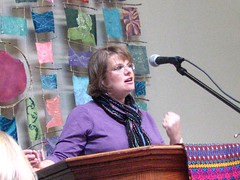
...My professor and friend Roberta Bondi says: when it comes to prayer, the most important thing is to show up. But it's not as easy as it might sound, is it? Many of us would much prefer to have a shiny, cleaned-up version of our selves to present to God (and other church types).
The challenge then, is indeed, to show up as we are, to try to be as real as we can, as honest as we can be about who we are and be those true selves before God, however, whoever, we understand God to be – being as honest as we can there, too. There's a whole lot of ambiguity therein, requiring all manner of muddling, I think.
One thing I love about this church is that it is a place that gives us permission to show up and muddle through together with brothers and sisters, which is what we are doing this morning.
I chose the Prodigal Son as our gospel reading today, because it was already on my mind...
You know what prodigal really means, right? It means “excessive, lavish, extravagant”. And we attach this adjective with derision to the lost son. But the most prodigal character in this story is not that younger brother, you know, but, rather, the father.
If the son breaks the norms of society in acting prodigally, the father shatters those norms by his own prodigal behavior: his extravagant forgiveness, his lavish love, his excessive grace.. His son who has shamed him and the entire family should be dead to him. His honor, that commodity which was all-important socially, had been offended.
But the father who should have been nursing his wounded pride, was, instead, waiting and watching for the return of his son – like a Mama who cannot forget her baby... So when his boy finally did show up on the horizon, though he was still a long way off, Jesus says, this father spotted his son – even with that cataract in his left eye he knew his boy's walk, and, abandoning all pretense of dignity, he ran, yes ran (which dignified men did NOT do) he ran like a crazy old woman, kicking up enough dust to get his pristine white jellaba dirty, he RAN to meet his son and wrapped him in his arms.
By the time we get to the end of the story, we are not surprised to find that the Father's lavish, extravagant, embarassingly motherly prodigal love extends to his other son as well – the one who feels no need for grace, who doesn't realize that he needs forgiveness in his life, who doesn't realize how much is broken and unwell in his soul or in his family because he has worked so blastedly hard to keep things together on the farm that, by God, things better be in order or there'll be hell to pay in the morning. We see that the father does not condemn the older son for his hardness of heart any more than he condemned the younger one for his wantonness.
Rather, the father invites them both into the joy of relationship with him as his beloved children, bound together by a healing, “wholing” flow of grace.
The sparse language of the two sons in the parable makes the words they say telling. The younger son believes he is not worthy to be a son, and so will ask to simply be a servant/a slave – doulos (same word in Greek).
The older son spitefully reminds his father that he has worked like a slave for him all these years which ought to be worth something. But the father makes it plain to both of them that he does not want slaves, worthy or unworthy of their keep. He wants his own beloved children, just as they are, to show up, to come back to him, to join him in the circle of love and joy that is their true birthright as family...
To choose sonship, daughtership, our heritage of belovedness, is to let ourselves be caught up in the flow of God's prodigal love, to go with the flow, and trust it to keep flowing. And in the life of Jesus, we are invited to trust that the flow of grace will indeed keep on saving us from ourselves, that nothing will stop it – not even bony death.
For God is not some remote man upstairs who might quietly slip away and abandon us, but the Mother/Father who doesn't just promise to show up if we'll show up, but runs to meet us at every turn. In life, in death, and beyond death. Our loving God pours out forgiveness and grace upon our every breath, our every atom of being. God washes us with saving grace, and promises to hold us in love for eternity.
Wednesday, October 13, 2010
Autumn
I sometimes practice walking
without making noise
through a leaf-carpeted ground
and find I cannot.
I cannot walk silently.
Quiet but not silent,
soft but not missing,
and I wonder if that's enough.

without making noise
through a leaf-carpeted ground
and find I cannot.
I cannot walk silently.
Quiet but not silent,
soft but not missing,
and I wonder if that's enough.
Thursday, October 7, 2010
My New Hero
My new hero is Chris Armstrong. Armstrong is the college kid who has been targeted for harassment by an Assistant District Attorney in Michigan. Turns out this jerk, named Shirvell (my new favorite creep) doesn't approve of Armstrong being the student body president at his alma mater because Armstrong is gay and is pushing "a radical gay agenda." Whatever that is.
And, with that excuse, Shirvell has gone on a one-man crusade against this college kid. He's established a "Chris Armstrong Watch" blog, where he rants against this young man, calling his a racist and a liar. He's posted swastikas on photos of Armstrong, suggesting he's a Nazi. He's protested outside student council meetings and outside Armstrong's residence!!
Armstrong, for his part, appears to have dealt with this creep with as much dignity as possible, ignoring him for the most part, it sounds like.
Armstrong spoke about this on CNN last night...
Chris Armstrong, the University of Michigan's first openly gay student body president, said the recent rash of headlines about gay teens who have committed suicide led him to break his silence about his own hurtful experience of being targeted online and in high school.
"It's hard not to say something," Armstrong told CNN's Anderson Cooper on "AC360" Wednesday night.
Shirvell is a disgrace and I can only wonder how long before his life self-destructs.
God be with you, Chris Armstrong.

And, with that excuse, Shirvell has gone on a one-man crusade against this college kid. He's established a "Chris Armstrong Watch" blog, where he rants against this young man, calling his a racist and a liar. He's posted swastikas on photos of Armstrong, suggesting he's a Nazi. He's protested outside student council meetings and outside Armstrong's residence!!
Armstrong, for his part, appears to have dealt with this creep with as much dignity as possible, ignoring him for the most part, it sounds like.
Armstrong spoke about this on CNN last night...
Chris Armstrong, the University of Michigan's first openly gay student body president, said the recent rash of headlines about gay teens who have committed suicide led him to break his silence about his own hurtful experience of being targeted online and in high school.
"It's hard not to say something," Armstrong told CNN's Anderson Cooper on "AC360" Wednesday night.
Shirvell is a disgrace and I can only wonder how long before his life self-destructs.
God be with you, Chris Armstrong.
Sunday, September 19, 2010
The Bible and Economics
Part of an ongoing series looking at all the many passages in the Bible that deal with wealth and poverty issues. You can see the links to the other passages in the series under the heading "The Bible and Economics" below or clicking right here.
I began looking at the book of Psalms last year and am still wading through it. The last batch I quoted excerpts from was Psalms 39 - 49.
Continuing walking through the book of Psalms, after chapter 49, we have many chapters that deal with prayers about "the enemy/enemies" who have beset the Psalmist or Israel, but these don't identify the "sins" of the enemies specifically, although given the times and the context of much of the Psalmists' complaints, you have to wonder if economic oppression might be amongst them. Nonetheless, skipping past those, we start up again in chapter 62 (still in the midst of passages complaining about ill treatment from the enemy) and looking through chapter 73...
Lowborn men are but a breath,

I began looking at the book of Psalms last year and am still wading through it. The last batch I quoted excerpts from was Psalms 39 - 49.
Continuing walking through the book of Psalms, after chapter 49, we have many chapters that deal with prayers about "the enemy/enemies" who have beset the Psalmist or Israel, but these don't identify the "sins" of the enemies specifically, although given the times and the context of much of the Psalmists' complaints, you have to wonder if economic oppression might be amongst them. Nonetheless, skipping past those, we start up again in chapter 62 (still in the midst of passages complaining about ill treatment from the enemy) and looking through chapter 73...
Lowborn men are but a breath,
the highborn are but a lie;
if weighed on a balance, they are nothing;
together they are only a breath.
Do not trust in extortion
Do not trust in extortion
or take pride in stolen goods;
though your riches increase,
do not set your heart on them.
Psalm 62: 9, 10
You care for the land and water it;
Psalm 62: 9, 10
You care for the land and water it;
you enrich it abundantly.
The streams of God are filled with water
to provide the people with grain,
for so you have ordained it.
Psalm 65: 9
You gave abundant showers, O God;
Psalm 65: 9
You gave abundant showers, O God;
you refreshed your weary inheritance.
Your people settled in it,
Your people settled in it,
and from your bounty, O God, you provided for the poor.
Psalm 68:9, 10
In the midst of more complaints about the enemy, the psalmist says...
The poor will see and be glad —
Psalm 68:9, 10
In the midst of more complaints about the enemy, the psalmist says...
The poor will see and be glad —
you who seek God, may your hearts live!
The LORD hears the needy
The LORD hears the needy
and does not despise his captive people.
Psalm 69: 32, 33
Yet I am poor and needy;
Psalm 69: 32, 33
Yet I am poor and needy;
come quickly to me, O God.
You are my help and my deliverer;
O LORD, do not delay.
Psalm 70: 5
Then, in chapter 72, the Psalmist prays for the king to be good and just, saying...
Endow the king with your justice, O God, the royal son with your righteousness.
He will judge your people in righteousness,
Psalm 70: 5
Then, in chapter 72, the Psalmist prays for the king to be good and just, saying...
Endow the king with your justice, O God, the royal son with your righteousness.
He will judge your people in righteousness,
your afflicted ones with justice.
The mountains will bring prosperity to the people,
The mountains will bring prosperity to the people,
the hills the fruit of righteousness.
He will defend the afflicted among the people
He will defend the afflicted among the people
and save the children of the needy;
he will crush the oppressor...
In his days the righteous will flourish;
In his days the righteous will flourish;
prosperity will abound till the moon is no more.
All kings will bow down to him
All kings will bow down to him
and all nations will serve him.
For he will deliver the needy who cry out,
For he will deliver the needy who cry out,
the afflicted who have no one to help.
He will take pity on the weak and the needy
He will take pity on the weak and the needy
and save the needy from death.
He will rescue them from oppression and violence,
He will rescue them from oppression and violence,
for precious is their blood in his sight.
Long may he live!
Long may he live!
May gold from Sheba be given him.
May people ever pray for him
and bless him all day long.
Let grain abound throughout the land;
Let grain abound throughout the land;
on the tops of the hills may it sway.
Let its fruit flourish like Lebanon;
let it thrive like the grass of the field.
Psalm 72: 1-4, 7, 11-16
...and although the Psalmist, in the passage above, is nominally speaking of a prayed for Just and Good King, it sounds more like he's speaking about the Kingdom of God, where "grain abounds" and freedom from oppression and violence is the norm for the poor and marginalized folk of the earth.
Surely God is good to Israel,
to those who are pure in heart.
But as for me, my feet had almost slipped;
Psalm 72: 1-4, 7, 11-16
...and although the Psalmist, in the passage above, is nominally speaking of a prayed for Just and Good King, it sounds more like he's speaking about the Kingdom of God, where "grain abounds" and freedom from oppression and violence is the norm for the poor and marginalized folk of the earth.
Surely God is good to Israel,
to those who are pure in heart.
But as for me, my feet had almost slipped;
I had nearly lost my foothold.
For I envied the arrogant
For I envied the arrogant
when I saw the prosperity of the wicked.
They have no struggles;
They have no struggles;
their bodies are healthy and strong.
They are free from the burdens common to man;
They are free from the burdens common to man;
they are not plagued by human ills.
Therefore pride is their necklace;
Therefore pride is their necklace;
they clothe themselves with violence.
From their callous hearts comes iniquity;
From their callous hearts comes iniquity;
the evil conceits of their minds know no limits.
They scoff, and speak with malice;
They scoff, and speak with malice;
in their arrogance they threaten oppression.
Their mouths lay claim to heaven,
Their mouths lay claim to heaven,
and their tongues take possession of the earth...
This is what the wicked are like —
This is what the wicked are like —
always carefree, they increase in wealth.
Psalm 73: 1-9, 12
While I get accused sometimes of using language that sounds like "class warfare," clearly, I'm not the first to use such language (if it were true)...
Psalm 73: 1-9, 12
While I get accused sometimes of using language that sounds like "class warfare," clearly, I'm not the first to use such language (if it were true)...
Monday, September 13, 2010
TRUE GRIT
I'll admit I have a prejudice against remaking classic movies. If a movie was done magnificently in the first place, why do a remake? Hello, Vince Vaugh, I love you man, but Psycho again? What was the point?
And who would dare to remake Casablanca? The Wizard of Oz? The Muppet Movie?!
Why mess with a classic?
Add to that blasphemy, the notion of casting someone in a role who is so completely DIFFERENT from the original star, what can come of that but EVIL?? Can you imagine Pauly Shore in Peter O'Toole's Lawrence of Arabia?? Jean Claude Van Damme as lovable George Bailey in It's a Wonderful Life?? With his lovely sweet wife played by Angeline Jolie??? To Sir, With Love with Chris Rock in Sidney Poitier's role???!!!
What disastrous ideas!
And yet, I say all of that to say this:
I can't wait to see the new remake of True Grit!
With hippie dippie Jeff "the Dude" Bridges playing the role immortalized by John "the Duke" Wayne!! Can't you just imagine uber-patriot John Wayne hurling and whirling in his grave at the very thought of a commie like Bridges stepping into his boots?
And to top it all off, to be directed by the Coen Brothers!
On one hand, I LOVE True Grit. I love John Wayne's Rooster Cogburn as well as the other characters - and not just Glen Campbell's pretty "Texican" La Boeuf and Kim Darby's spunky Mattie Ross, but an amazing Robert Duvalle as "Lucky" Ned Pepper (to be played by BARRY Pepper in the new movie, I hear), Dennis Hopper and Strother Martin. AND the perfectly cast John Fiedler as the Lawyer, J. Nobel Daggett. Perhaps it's just some old movie sentimentalism, but I thought John Wayne richly deserved that Oscar.
And having the Coen Brothers doing a movie that seems so far removed from their typical wacky or gruesome genres, that just doesn't seem like a logical fit. And speaking of illogical fits, Bridges? As Marshall Rooster Cogburn?? A man with "true grit?"
None of it seems to make sense and it seems like the type of movie I'd typically eschew.
BUT, I do love me some Coen Brothers, and I love me some Coen Brothers working with Jeff Bridges, and I love me some True Grit. I'm thinking that they can pull off the seemingly impossible and make something interesting, compelling and humorous out of their magic hats.
What do you think? Is this a disaster waiting to happen or possible big screen magic? Could it really be a whole new classic movie which honors and adds to the original classic?
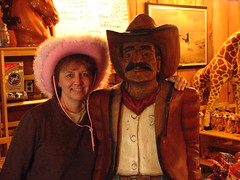
And who would dare to remake Casablanca? The Wizard of Oz? The Muppet Movie?!
Why mess with a classic?
Add to that blasphemy, the notion of casting someone in a role who is so completely DIFFERENT from the original star, what can come of that but EVIL?? Can you imagine Pauly Shore in Peter O'Toole's Lawrence of Arabia?? Jean Claude Van Damme as lovable George Bailey in It's a Wonderful Life?? With his lovely sweet wife played by Angeline Jolie??? To Sir, With Love with Chris Rock in Sidney Poitier's role???!!!
What disastrous ideas!
And yet, I say all of that to say this:
I can't wait to see the new remake of True Grit!
With hippie dippie Jeff "the Dude" Bridges playing the role immortalized by John "the Duke" Wayne!! Can't you just imagine uber-patriot John Wayne hurling and whirling in his grave at the very thought of a commie like Bridges stepping into his boots?
And to top it all off, to be directed by the Coen Brothers!
On one hand, I LOVE True Grit. I love John Wayne's Rooster Cogburn as well as the other characters - and not just Glen Campbell's pretty "Texican" La Boeuf and Kim Darby's spunky Mattie Ross, but an amazing Robert Duvalle as "Lucky" Ned Pepper (to be played by BARRY Pepper in the new movie, I hear), Dennis Hopper and Strother Martin. AND the perfectly cast John Fiedler as the Lawyer, J. Nobel Daggett. Perhaps it's just some old movie sentimentalism, but I thought John Wayne richly deserved that Oscar.
And having the Coen Brothers doing a movie that seems so far removed from their typical wacky or gruesome genres, that just doesn't seem like a logical fit. And speaking of illogical fits, Bridges? As Marshall Rooster Cogburn?? A man with "true grit?"
None of it seems to make sense and it seems like the type of movie I'd typically eschew.
BUT, I do love me some Coen Brothers, and I love me some Coen Brothers working with Jeff Bridges, and I love me some True Grit. I'm thinking that they can pull off the seemingly impossible and make something interesting, compelling and humorous out of their magic hats.
What do you think? Is this a disaster waiting to happen or possible big screen magic? Could it really be a whole new classic movie which honors and adds to the original classic?
Sunday, September 12, 2010
Last Farmer's Ghost...
Sorry I've been away. Life, as it is wont to do, has been busy. Here's an early poem of mine (written right at ten years ago, after years of reading Wendell Berry had warped my mind) suitable for this time of the year...
The last farmer's ghost
Haunting empty fields
of overgrown weeds,
walking the rows where corn once grew
he moans and mourns the
lost season,
the hallow ground, now laying
fallow ground.
He died and no one was there to bury him
and so he haunts and walks
as he always has
this earth only dear to him

The last farmer's ghost
Haunting empty fields
of overgrown weeds,
walking the rows where corn once grew
he moans and mourns the
lost season,
the hallow ground, now laying
fallow ground.
He died and no one was there to bury him
and so he haunts and walks
as he always has
this earth only dear to him
Thursday, September 2, 2010
Dear Glenn
Jim Wallis reaches out to Glenn Beck once again, asking for reason and conversation. Excerpts..
Dear Glenn,
I think we got off on the wrong foot. I listened to your speech last Saturday and heard a lot of things that we agree on. In fact, I have used some of the same language of our need to turn to God, and the values of "faith, hope, and charity" (love). What I would like to find out, and others would too, is what you mean by that language. Until last weekend, you have consistently described yourself primarily as an entertainer, and the public has known you as a talk show host.
But last Saturday, you sounded more like an evangelist or revivalist on the steps of the Lincoln Memorial. I know we disagree significantly on many issues of public policy, but you said that people can disagree on politics and still agree on basic values and try to come together. Maybe we should test that.
Instead of my being up on your blackboard and a regular target of your show's rhetoric, why don't we finally have that civil dialogue I invited you to months ago? Your speech on the Mall suggested and even promised a change of heart on your part, so why don’t we talk? Here are a few things I think we could talk about.
First, I’ve been asked by people in the media if it matters that you are a Mormon. I unequivocally answer, no, it does not. We don’t want more anti-Mormon bigotry any more than we want the anti-Muslim bigotry now rising up across the country. By the way, you should speak to that (against it).
On Saturday you talked about the fact that our nation has some scars in our past. I think one of those scars is the historical persecution and bigotry that many Mormons have faced, as well as Catholics, Jews, and Muslims. But, as you said, instead of dwelling on the bad things of the past, we need to learn from them and look to the future. The best way to do that is to make sure we all stand for religious liberty and tolerance, and are careful not to denigrate anybody else’s faith tradition, experience, or language.
If you are ever in need of an evangelical Christian to speak out against anti-Mormon sentiment directed at you or others, I am here to help.
In an interview the day after your rally you said that you would like to "amend" your statement in which you accused President Obama of being a racist and said he had a deep hatred in his heart for white people. I commend you for that. But a simple and straightforward apology would have been better. All of us say things we shouldn’t sometimes, but you have consistently mischaracterized the President’s faith. You also said in that interview that you would like to have a conversation about it. I’d like to do that.
I also think it would be a good thing to stop attacking people and churches you label as "social justice Christians," not just because I’m tired of being on your blackboard, but because I think you genuinely don’t understand the concept and how central it is to biblical faith, and how essential to the whole gospel. I am sure there are those who have misused the term, just as there are those who will co-opt any good label that exists. If "social justice" were truly code for Communism or Marxism or Nazism, as you have suggested, I would be right beside you in condemning it.
In his opening sermon at Nazareth, Jesus gave his own mission statement when he declared, "The Spirit of the Lord is upon me, because he has anointed me to bring good news to the poor, he has sent me to proclaim release to the captives and recovery of sight to the blind, to let the oppressed go free, to proclaim the year of the Lord’s favor." Those were his very words, Glenn, including the stuff about releasing captives and freeing the oppressed—language you have been pretty critical of..
I thought you might be changing your own mind a bit when I heard you lifting up the legacy of Dr. Martin Luther King Jr. and associating yourself with him on the 47th anniversary of his eloquent "I Have a Dream" speech, given from the very place you stood on Saturday. I was encouraged by that because Dr. King was the archetypal social justice Christian and the primary teacher for many of us on the social implications of biblical faith. His personal faith led him to fight for racial and economic justice -- social justice.
I hope you read many of his words before you spoke on the anniversary of his great speech, because we can't claim the mantle of King without also embracing his message. You seemed to affirm King's assertion that racism was not simply a private moral issue but one that required response through federal action and legislation. I'd like to talk with you about the rest of King's dream. If King was right about racism, could he have also been right about poverty and war? I didn't hear much about King's words on either of those issues in your speech on Saturday.
Before, I thought you were just another cable news talk show host. But now, you are using the language of a spiritual and even a religious leader. You acted as though you now want people to look to you for that kind of spiritual leadership.
But to invoke the name of God and the vocation of a spiritual leader has consequences. It brings with it a whole new level of responsibility and accountability. It will require a more civil and even humble tone than you are used to. It will likely mean saying some different things and, certainly, saying many things differently than you have in the past.
Pundits and talk show hosts say things that divide, create conflict, and get good ratings. They appeal more to fear than to hope. But spiritual leaders try to avoid vitriol and bombastic language, and to rather seek to find common ground and bring people together to find real solutions to real problems. So let's talk about that too.
You said your rally day was the start of the nation turning to God. Many people in this country have already done that and, in fact, try to do it every day. But maybe it was the start of Glenn Beck becoming a different kind of public voice than you have been before. I hope so. And one good way to demonstrate that is to agree to an honest and civil conversation with somebody you have often attacked. How about it, Glenn?
Will a welcoming answer be forthcoming, do you think?

Dear Glenn,
I think we got off on the wrong foot. I listened to your speech last Saturday and heard a lot of things that we agree on. In fact, I have used some of the same language of our need to turn to God, and the values of "faith, hope, and charity" (love). What I would like to find out, and others would too, is what you mean by that language. Until last weekend, you have consistently described yourself primarily as an entertainer, and the public has known you as a talk show host.
But last Saturday, you sounded more like an evangelist or revivalist on the steps of the Lincoln Memorial. I know we disagree significantly on many issues of public policy, but you said that people can disagree on politics and still agree on basic values and try to come together. Maybe we should test that.
Instead of my being up on your blackboard and a regular target of your show's rhetoric, why don't we finally have that civil dialogue I invited you to months ago? Your speech on the Mall suggested and even promised a change of heart on your part, so why don’t we talk? Here are a few things I think we could talk about.
First, I’ve been asked by people in the media if it matters that you are a Mormon. I unequivocally answer, no, it does not. We don’t want more anti-Mormon bigotry any more than we want the anti-Muslim bigotry now rising up across the country. By the way, you should speak to that (against it).
On Saturday you talked about the fact that our nation has some scars in our past. I think one of those scars is the historical persecution and bigotry that many Mormons have faced, as well as Catholics, Jews, and Muslims. But, as you said, instead of dwelling on the bad things of the past, we need to learn from them and look to the future. The best way to do that is to make sure we all stand for religious liberty and tolerance, and are careful not to denigrate anybody else’s faith tradition, experience, or language.
If you are ever in need of an evangelical Christian to speak out against anti-Mormon sentiment directed at you or others, I am here to help.
In an interview the day after your rally you said that you would like to "amend" your statement in which you accused President Obama of being a racist and said he had a deep hatred in his heart for white people. I commend you for that. But a simple and straightforward apology would have been better. All of us say things we shouldn’t sometimes, but you have consistently mischaracterized the President’s faith. You also said in that interview that you would like to have a conversation about it. I’d like to do that.
I also think it would be a good thing to stop attacking people and churches you label as "social justice Christians," not just because I’m tired of being on your blackboard, but because I think you genuinely don’t understand the concept and how central it is to biblical faith, and how essential to the whole gospel. I am sure there are those who have misused the term, just as there are those who will co-opt any good label that exists. If "social justice" were truly code for Communism or Marxism or Nazism, as you have suggested, I would be right beside you in condemning it.
In his opening sermon at Nazareth, Jesus gave his own mission statement when he declared, "The Spirit of the Lord is upon me, because he has anointed me to bring good news to the poor, he has sent me to proclaim release to the captives and recovery of sight to the blind, to let the oppressed go free, to proclaim the year of the Lord’s favor." Those were his very words, Glenn, including the stuff about releasing captives and freeing the oppressed—language you have been pretty critical of..
I thought you might be changing your own mind a bit when I heard you lifting up the legacy of Dr. Martin Luther King Jr. and associating yourself with him on the 47th anniversary of his eloquent "I Have a Dream" speech, given from the very place you stood on Saturday. I was encouraged by that because Dr. King was the archetypal social justice Christian and the primary teacher for many of us on the social implications of biblical faith. His personal faith led him to fight for racial and economic justice -- social justice.
I hope you read many of his words before you spoke on the anniversary of his great speech, because we can't claim the mantle of King without also embracing his message. You seemed to affirm King's assertion that racism was not simply a private moral issue but one that required response through federal action and legislation. I'd like to talk with you about the rest of King's dream. If King was right about racism, could he have also been right about poverty and war? I didn't hear much about King's words on either of those issues in your speech on Saturday.
Before, I thought you were just another cable news talk show host. But now, you are using the language of a spiritual and even a religious leader. You acted as though you now want people to look to you for that kind of spiritual leadership.
But to invoke the name of God and the vocation of a spiritual leader has consequences. It brings with it a whole new level of responsibility and accountability. It will require a more civil and even humble tone than you are used to. It will likely mean saying some different things and, certainly, saying many things differently than you have in the past.
Pundits and talk show hosts say things that divide, create conflict, and get good ratings. They appeal more to fear than to hope. But spiritual leaders try to avoid vitriol and bombastic language, and to rather seek to find common ground and bring people together to find real solutions to real problems. So let's talk about that too.
You said your rally day was the start of the nation turning to God. Many people in this country have already done that and, in fact, try to do it every day. But maybe it was the start of Glenn Beck becoming a different kind of public voice than you have been before. I hope so. And one good way to demonstrate that is to agree to an honest and civil conversation with somebody you have often attacked. How about it, Glenn?
Will a welcoming answer be forthcoming, do you think?
Saturday, August 28, 2010
Normalcy: Never Again
("Normalcy: Never Again" is the actual title of King's "I Have a Dream" speech, I'm told. He gave this speech 47 years ago, on August 28, 1963. I was five months old.)
I am happy to join with you today in what will go down in history as the greatest demonstration for freedom in the history of our nation.
Five score years ago, a great American, in whose symbolic shadow we stand today, signed the Emancipation Proclamation. This momentous decree came as a great beacon light of hope to millions of Negro slaves who had been seared in the flames of withering injustice. It came as a joyous daybreak to end the long night of their captivity.
But one hundred years later, the Negro still is not free. One hundred years later, the life of the Negro is still sadly crippled by the manacles of segregation and the chains of discrimination. One hundred years later, the Negro lives on a lonely island of poverty in the midst of a vast ocean of material prosperity. One hundred years later, the Negro is still languishing in the corners of American society and finds himself an exile in his own land. So we have come here today to dramatize a shameful condition.
In a sense we have come to our nation's capital to cash a check. When the architects of our republic wrote the magnificent words of the Constitution and the Declaration of Independence, they were signing a promissory note to which every American was to fall heir. This note was a promise that all men, yes, black men as well as white men, would be guaranteed the unalienable rights of life, liberty, and the pursuit of happiness.
It is obvious today that America has defaulted on this promissory note insofar as her citizens of color are concerned. Instead of honoring this sacred obligation, America has given the Negro people a bad check, a check which has come back marked "insufficient funds." But we refuse to believe that the bank of justice is bankrupt. We refuse to believe that there are insufficient funds in the great vaults of opportunity of this nation.
So we have come to cash this check — a check that will give us upon demand the riches of freedom and the security of justice. We have also come to this hallowed spot to remind America of the fierce urgency of now. This is no time to engage in the luxury of cooling off or to take the tranquilizing drug of gradualism. Now is the time to make real the promises of democracy. Now is the time to rise from the dark and desolate valley of segregation to the sunlit path of racial justice. Now is the time to lift our nation from the quick sands of racial injustice to the solid rock of brotherhood. Now is the time to make justice a reality for all of God's children.
It would be fatal for the nation to overlook the urgency of the moment. This sweltering summer of the Negro's legitimate discontent will not pass until there is an invigorating autumn of freedom and equality. Nineteen sixty-three is not an end, but a beginning. Those who hope that the Negro needed to blow off steam and will now be content will have a rude awakening if the nation returns to business as usual. There will be neither rest nor tranquility in America until the Negro is granted his citizenship rights. The whirlwinds of revolt will continue to shake the foundations of our nation until the bright day of justice emerges.
But there is something that I must say to my people who stand on the warm threshold which leads into the palace of justice. In the process of gaining our rightful place we must not be guilty of wrongful deeds. Let us not seek to satisfy our thirst for freedom by drinking from the cup of bitterness and hatred.
We must forever conduct our struggle on the high plane of dignity and discipline. We must not allow our creative protest to degenerate into physical violence. Again and again we must rise to the majestic heights of meeting physical force with soul force.
The marvelous new militancy which has engulfed the Negro community must not lead us to a distrust of all white people, for many of our white brothers, as evidenced by their presence here today, have come to realize that their destiny is tied up with our destiny. They have come to realize that their freedom is inextricably bound to our freedom. We cannot walk alone.
As we walk, we must make the pledge that we shall always march ahead. We cannot turn back.
There are those who are asking the devotees of civil rights, "When will you be satisfied?" We can never be satisfied as long as the Negro is the victim of the unspeakable horrors of police brutality. We can never be satisfied, as long as our bodies, heavy with the fatigue of travel, cannot gain lodging in the motels of the highways and the hotels of the cities.
We cannot be satisfied as long as the Negro's basic mobility is from a smaller ghetto to a larger one. We can never be satisfied as long as our children are stripped of their selfhood and robbed of their dignity by signs stating "For Whites Only". We cannot be satisfied as long as a Negro in Mississippi cannot vote and a Negro in New York believes he has nothing for which to vote. No, no, we are not satisfied, and we will not be satisfied until justice rolls down like waters and righteousness like a mighty stream.
I am not unmindful that some of you have come here out of great trials and tribulations. Some of you have come fresh from narrow jail cells. Some of you have come from areas where your quest for freedom left you battered by the storms of persecution and staggered by the winds of police brutality. You have been the veterans of creative suffering. Continue to work with the faith that unearned suffering is redemptive.
Go back to Mississippi, go back to Alabama, go back to South Carolina, go back to Georgia, go back to Louisiana, go back to the slums and ghettos of our northern cities, knowing that somehow this situation can and will be changed. Let us not wallow in the valley of despair.
I say to you today, my friends, so even though we face the difficulties of today and tomorrow, I still have a dream. It is a dream deeply rooted in the American dream.
I have a dream that one day this nation will rise up and live out the true meaning of its creed: "We hold these truths to be self-evident: that all men are created equal."
I have a dream that one day on the red hills of Georgia the sons of former slaves and the sons of former slave owners will be able to sit down together at the table of brotherhood.
I have a dream that one day even the state of Mississippi, a state sweltering with the heat of injustice, sweltering with the heat of oppression, will be transformed into an oasis of freedom and justice.
I have a dream that my four little children will one day live in a nation where they will not be judged by the color of their skin but by the content of their character.
I have a dream today.
I have a dream that one day, down in Alabama, with its vicious racists, with its governor having his lips dripping with the words of interposition and nullification; one day right there in Alabama, little black boys and black girls will be able to join hands with little white boys and white girls as sisters and brothers.
I have a dream today.
I have a dream that one day every valley shall be exalted, every hill and mountain shall be made low, the rough places will be made plain, and the crooked places will be made straight, and the glory of the Lord shall be revealed, and all flesh shall see it together.
This is our hope. This is the faith that I go back to the South with. With this faith we will be able to hew out of the mountain of despair a stone of hope. With this faith we will be able to transform the jangling discords of our nation into a beautiful symphony of brotherhood. With this faith we will be able to work together, to pray together, to struggle together, to go to jail together, to stand up for freedom together, knowing that we will be free one day.
This will be the day when all of God's children will be able to sing with a new meaning, "My country, 'tis of thee, sweet land of liberty, of thee I sing. Land where my fathers died, land of the pilgrim's pride, from every mountainside, let freedom ring."
And if America is to be a great nation this must become true. So let freedom ring from the prodigious hilltops of New Hampshire. Let freedom ring from the mighty mountains of New York. Let freedom ring from the heightening Alleghenies of Pennsylvania!
Let freedom ring from the snowcapped Rockies of Colorado!
Let freedom ring from the curvaceous slopes of California!
But not only that; let freedom ring from Stone Mountain of Georgia!
Let freedom ring from Lookout Mountain of Tennessee!
Let freedom ring from every hill and molehill of Mississippi. From every mountainside, let freedom ring.
And when this happens, when we allow freedom to ring, when we let it ring from every village and every hamlet, from every state and every city, we will be able to speed up that day when all of God's children, black men and white men, Jews and Gentiles, Protestants and Catholics, will be able to join hands and sing in the words of the old Negro spiritual, "Free at last! free at last! thank God Almighty, we are free at last!"

I am happy to join with you today in what will go down in history as the greatest demonstration for freedom in the history of our nation.
Five score years ago, a great American, in whose symbolic shadow we stand today, signed the Emancipation Proclamation. This momentous decree came as a great beacon light of hope to millions of Negro slaves who had been seared in the flames of withering injustice. It came as a joyous daybreak to end the long night of their captivity.
But one hundred years later, the Negro still is not free. One hundred years later, the life of the Negro is still sadly crippled by the manacles of segregation and the chains of discrimination. One hundred years later, the Negro lives on a lonely island of poverty in the midst of a vast ocean of material prosperity. One hundred years later, the Negro is still languishing in the corners of American society and finds himself an exile in his own land. So we have come here today to dramatize a shameful condition.
In a sense we have come to our nation's capital to cash a check. When the architects of our republic wrote the magnificent words of the Constitution and the Declaration of Independence, they were signing a promissory note to which every American was to fall heir. This note was a promise that all men, yes, black men as well as white men, would be guaranteed the unalienable rights of life, liberty, and the pursuit of happiness.
It is obvious today that America has defaulted on this promissory note insofar as her citizens of color are concerned. Instead of honoring this sacred obligation, America has given the Negro people a bad check, a check which has come back marked "insufficient funds." But we refuse to believe that the bank of justice is bankrupt. We refuse to believe that there are insufficient funds in the great vaults of opportunity of this nation.
So we have come to cash this check — a check that will give us upon demand the riches of freedom and the security of justice. We have also come to this hallowed spot to remind America of the fierce urgency of now. This is no time to engage in the luxury of cooling off or to take the tranquilizing drug of gradualism. Now is the time to make real the promises of democracy. Now is the time to rise from the dark and desolate valley of segregation to the sunlit path of racial justice. Now is the time to lift our nation from the quick sands of racial injustice to the solid rock of brotherhood. Now is the time to make justice a reality for all of God's children.
It would be fatal for the nation to overlook the urgency of the moment. This sweltering summer of the Negro's legitimate discontent will not pass until there is an invigorating autumn of freedom and equality. Nineteen sixty-three is not an end, but a beginning. Those who hope that the Negro needed to blow off steam and will now be content will have a rude awakening if the nation returns to business as usual. There will be neither rest nor tranquility in America until the Negro is granted his citizenship rights. The whirlwinds of revolt will continue to shake the foundations of our nation until the bright day of justice emerges.
But there is something that I must say to my people who stand on the warm threshold which leads into the palace of justice. In the process of gaining our rightful place we must not be guilty of wrongful deeds. Let us not seek to satisfy our thirst for freedom by drinking from the cup of bitterness and hatred.
We must forever conduct our struggle on the high plane of dignity and discipline. We must not allow our creative protest to degenerate into physical violence. Again and again we must rise to the majestic heights of meeting physical force with soul force.
The marvelous new militancy which has engulfed the Negro community must not lead us to a distrust of all white people, for many of our white brothers, as evidenced by their presence here today, have come to realize that their destiny is tied up with our destiny. They have come to realize that their freedom is inextricably bound to our freedom. We cannot walk alone.
As we walk, we must make the pledge that we shall always march ahead. We cannot turn back.
There are those who are asking the devotees of civil rights, "When will you be satisfied?" We can never be satisfied as long as the Negro is the victim of the unspeakable horrors of police brutality. We can never be satisfied, as long as our bodies, heavy with the fatigue of travel, cannot gain lodging in the motels of the highways and the hotels of the cities.
We cannot be satisfied as long as the Negro's basic mobility is from a smaller ghetto to a larger one. We can never be satisfied as long as our children are stripped of their selfhood and robbed of their dignity by signs stating "For Whites Only". We cannot be satisfied as long as a Negro in Mississippi cannot vote and a Negro in New York believes he has nothing for which to vote. No, no, we are not satisfied, and we will not be satisfied until justice rolls down like waters and righteousness like a mighty stream.
I am not unmindful that some of you have come here out of great trials and tribulations. Some of you have come fresh from narrow jail cells. Some of you have come from areas where your quest for freedom left you battered by the storms of persecution and staggered by the winds of police brutality. You have been the veterans of creative suffering. Continue to work with the faith that unearned suffering is redemptive.
Go back to Mississippi, go back to Alabama, go back to South Carolina, go back to Georgia, go back to Louisiana, go back to the slums and ghettos of our northern cities, knowing that somehow this situation can and will be changed. Let us not wallow in the valley of despair.
I say to you today, my friends, so even though we face the difficulties of today and tomorrow, I still have a dream. It is a dream deeply rooted in the American dream.
I have a dream that one day this nation will rise up and live out the true meaning of its creed: "We hold these truths to be self-evident: that all men are created equal."
I have a dream that one day on the red hills of Georgia the sons of former slaves and the sons of former slave owners will be able to sit down together at the table of brotherhood.
I have a dream that one day even the state of Mississippi, a state sweltering with the heat of injustice, sweltering with the heat of oppression, will be transformed into an oasis of freedom and justice.
I have a dream that my four little children will one day live in a nation where they will not be judged by the color of their skin but by the content of their character.
I have a dream today.
I have a dream that one day, down in Alabama, with its vicious racists, with its governor having his lips dripping with the words of interposition and nullification; one day right there in Alabama, little black boys and black girls will be able to join hands with little white boys and white girls as sisters and brothers.
I have a dream today.
I have a dream that one day every valley shall be exalted, every hill and mountain shall be made low, the rough places will be made plain, and the crooked places will be made straight, and the glory of the Lord shall be revealed, and all flesh shall see it together.
This is our hope. This is the faith that I go back to the South with. With this faith we will be able to hew out of the mountain of despair a stone of hope. With this faith we will be able to transform the jangling discords of our nation into a beautiful symphony of brotherhood. With this faith we will be able to work together, to pray together, to struggle together, to go to jail together, to stand up for freedom together, knowing that we will be free one day.
This will be the day when all of God's children will be able to sing with a new meaning, "My country, 'tis of thee, sweet land of liberty, of thee I sing. Land where my fathers died, land of the pilgrim's pride, from every mountainside, let freedom ring."
And if America is to be a great nation this must become true. So let freedom ring from the prodigious hilltops of New Hampshire. Let freedom ring from the mighty mountains of New York. Let freedom ring from the heightening Alleghenies of Pennsylvania!
Let freedom ring from the snowcapped Rockies of Colorado!
Let freedom ring from the curvaceous slopes of California!
But not only that; let freedom ring from Stone Mountain of Georgia!
Let freedom ring from Lookout Mountain of Tennessee!
Let freedom ring from every hill and molehill of Mississippi. From every mountainside, let freedom ring.
And when this happens, when we allow freedom to ring, when we let it ring from every village and every hamlet, from every state and every city, we will be able to speed up that day when all of God's children, black men and white men, Jews and Gentiles, Protestants and Catholics, will be able to join hands and sing in the words of the old Negro spiritual, "Free at last! free at last! thank God Almighty, we are free at last!"
Wednesday, August 25, 2010
Which Musical Are You?
So, following a bit more "churchy" discussion at church tonight, the topic moved to the less spiritual, "If you could be any role in a musical, who would you be and from which musical?"
My first answer right off the top of my head was Curly, from Oklahoma, as that is one of my favorite musicals. But then, as the discussion continued, I kept thinking, "Yeah! That's who I wanna be!"
I bounced over to Danny from Grease and Dick Van Dyke in Mary Poppins (I LOVE him in that!) and, finally, Kermit the Frog, from The Muppet Movie...
No, make that Gonzo! (I love I'm Going to Go Back There Some Day.)
For my church friends who might happen here, some of the other answers were:
Roger - Don Quixote
Brady - Maria's friend (whose name I forget) from West Side Story
Susan T - Maria from Sound of Music (or any Julie Andrews roles)
Susan B - Eva Peron from Evita
Tracy and Molly also offered opinions, but I'm forgetting them.
How about it, anyone? Who would you be?
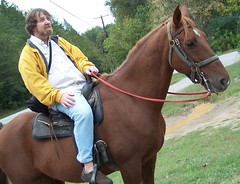
My first answer right off the top of my head was Curly, from Oklahoma, as that is one of my favorite musicals. But then, as the discussion continued, I kept thinking, "Yeah! That's who I wanna be!"
I bounced over to Danny from Grease and Dick Van Dyke in Mary Poppins (I LOVE him in that!) and, finally, Kermit the Frog, from The Muppet Movie...
No, make that Gonzo! (I love I'm Going to Go Back There Some Day.)
For my church friends who might happen here, some of the other answers were:
Roger - Don Quixote
Brady - Maria's friend (whose name I forget) from West Side Story
Susan T - Maria from Sound of Music (or any Julie Andrews roles)
Susan B - Eva Peron from Evita
Tracy and Molly also offered opinions, but I'm forgetting them.
How about it, anyone? Who would you be?
Monday, August 16, 2010
Pharisee Heresy
Hey, gang! It's group participation time!
I was wondering if folk would like to put down what they know, have heard, have read, or just randomly think about the problem with being Pharisaical.
We all know that, in most places these days, to accuse someone of being a Pharisee is not a compliment. "Being a pharisee" has come to be known as being hypocritical or being judgmental or, something. And that's what I'm wanting you to share with me - What is the "sin of being a Pharisee?"
First off, the disclaimers: I understand from various readings and sermons over the years that the Pharisees aren't quite the bad guys we tend to make them out to be, at least not at their best.
In Jesus' day, the Jewish people were a subjected people, second class citizens under the thumb of the Roman empire and in danger of being assimilated and losing their religion. The Pharisees were a "back to the fundamentals" group who wanted to help the Jewish folk be true to their best ideals. It is my understanding that they tended to be simple living advocates, who shunned the excesses of materialism and that they were often quite good people who just wanted to be true to their God.
Nonetheless, we know that they took it overboard and became wrongly judgmental, sometimes hypocritical. But of course, we know that being "judgmental" is not a wrong in itself - we OUGHT to be discerning and make judgments on matters. Or not?
So, tell me what you think: Where did the Pharisees go wrong? What was/is their sin?
Thanks.

I was wondering if folk would like to put down what they know, have heard, have read, or just randomly think about the problem with being Pharisaical.
We all know that, in most places these days, to accuse someone of being a Pharisee is not a compliment. "Being a pharisee" has come to be known as being hypocritical or being judgmental or, something. And that's what I'm wanting you to share with me - What is the "sin of being a Pharisee?"
First off, the disclaimers: I understand from various readings and sermons over the years that the Pharisees aren't quite the bad guys we tend to make them out to be, at least not at their best.
In Jesus' day, the Jewish people were a subjected people, second class citizens under the thumb of the Roman empire and in danger of being assimilated and losing their religion. The Pharisees were a "back to the fundamentals" group who wanted to help the Jewish folk be true to their best ideals. It is my understanding that they tended to be simple living advocates, who shunned the excesses of materialism and that they were often quite good people who just wanted to be true to their God.
Nonetheless, we know that they took it overboard and became wrongly judgmental, sometimes hypocritical. But of course, we know that being "judgmental" is not a wrong in itself - we OUGHT to be discerning and make judgments on matters. Or not?
So, tell me what you think: Where did the Pharisees go wrong? What was/is their sin?
Thanks.
Subscribe to:
Posts (Atom)